Get Full Government Meeting Transcripts, Videos, & Alerts Forever!
Get email alerts on the Career Pathways topic
No spam. Unsubscribe anytime.
Employers and Educators Back Bills Aimed at Expanding College and Career Pathways
Summary
Business and K–12 stakeholders told the committee bills to coordinate a statewide vision for career pathways and to expand credentialing and work-based learning could help align schools with employer needs; advocates called for interagency governance and return-on-investment audits.
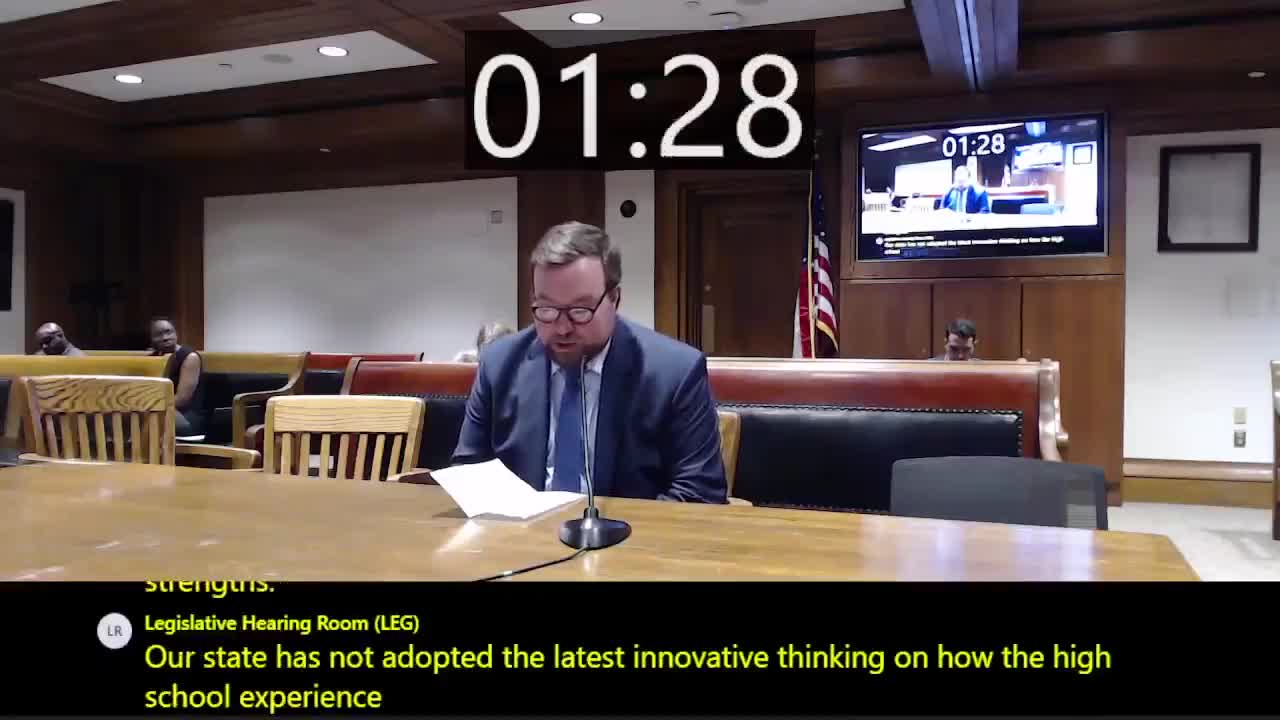
James Michalowski, director of policy for the Massachusetts Business Alliance for Education (MBAE), told the Joint Committee on Education the state ought to adopt a unified vision and stronger governance for college and career pathways. He said proposals including H637/S325 and related bills would codify the workforce skills cabinet’s role, set a “North Star” goal for pathway growth and create mechanisms—such as biennial return‑on‑investment audits—to align offerings with employer needs.
Michalowski said employers report concern that some graduates lack the skills needed for open positions and that more students should have access to industry‑recognized credentials and work‑based learning while in high school. He listed a bundle of bills under consideration—H637, S325, H722, H686/S321, H727/S331 and S439—that, together, would address governance, credentialing, flexibility between pathway programs, and data that links pathway expansions to labor-market needs.
Why it matters: witnesses argued expanding career pathways could give students multiple post‑secondary options while helping employers fill anticipated openings. The committee received the testimony as part of a broader hearing that also covered rural funding and transportation; chairs indicated these pathway bills will be folded into follow‑up policy discussions focused on K–12 outcomes and workforce alignment.