Get Full Government Meeting Transcripts, Videos, & Alerts Forever!
Get email alerts on the School Choice Exemption topic
No spam. Unsubscribe anytime.
Small-district petitions seek change to school-choice rule that can saddle receiving towns with long-term tuition costs
Summary
Hancock and Warwick officials asked the Joint Committee on Education to exempt small elementary-only districts from Chapter 76, Section 12B(k), saying the rule can require receiving towns to pay high secondary‑school tuition for nonresident choice students and jeopardize small programs.
Officials from Hancock and Warwick told the Joint Committee on Education that an obscure interpretation of Chapter 76, Section 12B(k) is forcing small elementary districts to choose between accepting school-choice students and risking large future tuition bills — or opting out and shrinking class sizes and programming.
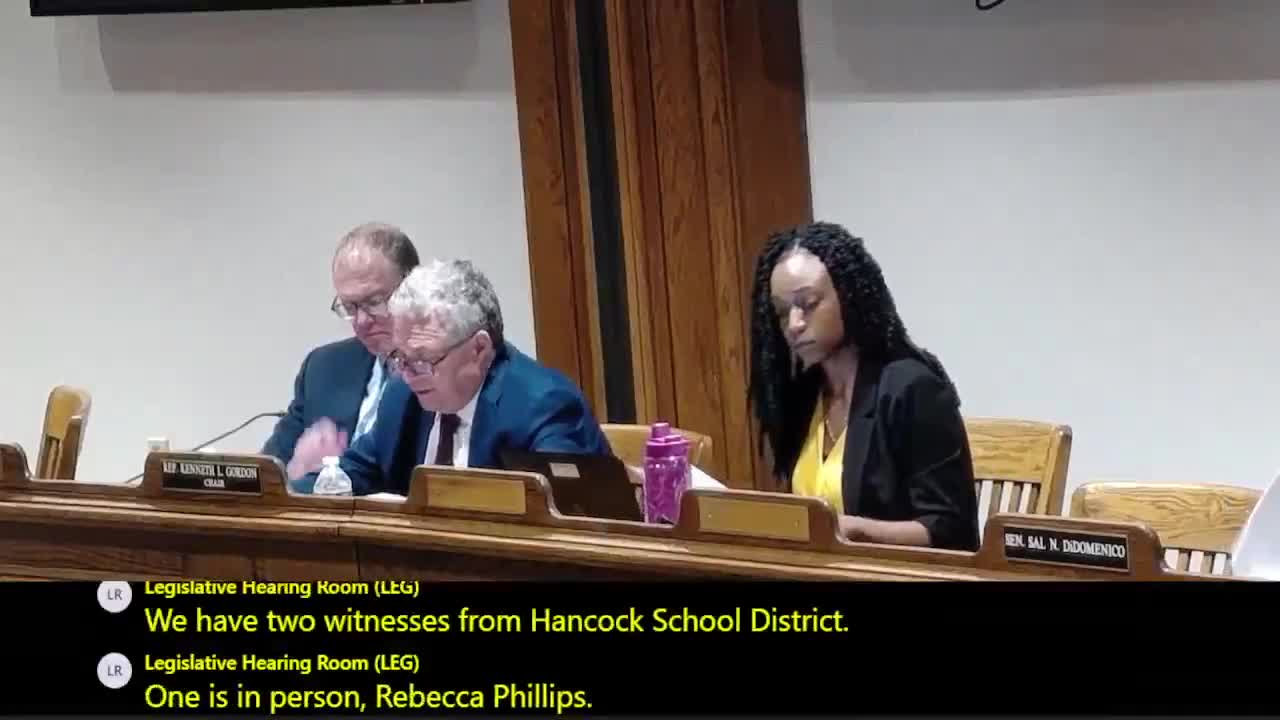
Rebecca Phillips, superintendent of Hancock, said that after a DESE advisory two years ago the district learned it could be required to pay high secondary tuition for choice students who continued on to high school. “We must opt out of choice,” she told the committee, explaining Hancock would otherwise pay roughly $17,800 per student in high-school tuition while receiving only $5,000 in choice funds, creating a $13,000 annual gap per student.
That gap led Hancock to opt out of choice for a second year, Phillips said, and left the district with small kindergarten classes (four students) and fewer opportunities to balance class sizes. Samantha Lincoln, an early-childhood teacher in Hancock, said the multi-age classrooms and peer interactions that choice students provide are central to the district’s program and would be lost if Hancock could not accept choice students.
In Warwick, municipal leaders and school staff filed a home-rule petition (H751) with similar facts: the town’s elementary school could gain immediate revenue from choice but faces large multi‑year tuition exposure if those students later attend regional secondary programs. Diana Noble, chair of Warwick’s finance committee, provided a seven‑year model showing an early boost from choice but escalating net losses by year five and a projected seven‑year loss of about $224,000 (rough estimate from testimony) if the town accepts choice students and then must pay secondary tuition.
Legal focus: both delegations asked the committee to exempt their districts through home-rule petitions and urged a broader statutory fix to Chapter 76, Section 12B(k). Representative and senator members of the panel suggested working in parallel: seek near-term relief through home-rule petitions while drafting legislative language to fix the statute for all similarly situated districts.
Next steps: committee chairs asked the petitioners to collaborate with Hancock and similar districts to propose statutory language that could solve the problem statewide. Lawmakers said they would pursue either a single statutory correction or parallel relief measures, depending on stakeholder consensus and timing.