Get Full Government Meeting Transcripts, Videos, & Alerts Forever!
Get email alerts on the School Transportation Funding topic
No spam. Unsubscribe anytime.
Superintendents, Towns and Teachers Urge State to Fix School Transportation Funding and Market Issues
Summary
Witnesses at the education committee hearing urged full funding of regional school transportation and new remedies for soaring bus costs, pointing to shrinking competition among providers, one-bid procurements, and large local budget impacts.
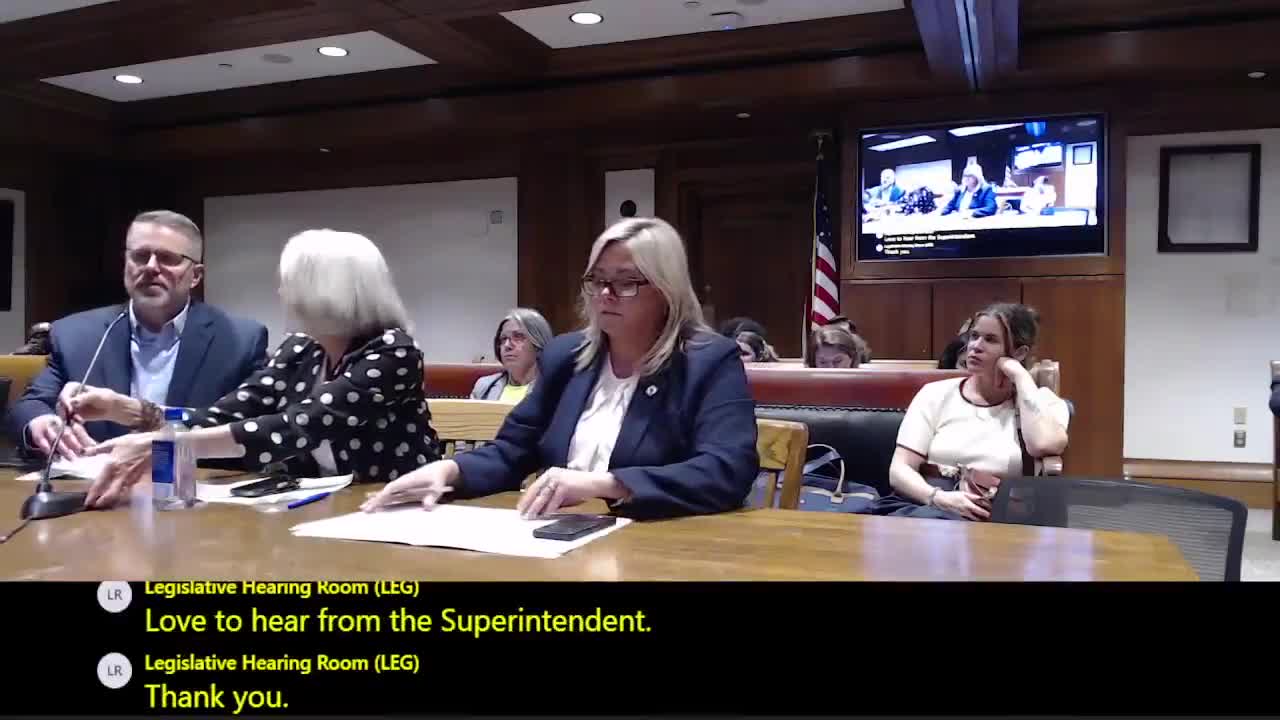
A broad coalition of superintendents, municipal officials, educators and union leaders urged the Joint Committee on Education to support bills that would restore or increase state reimbursement for school transportation and to examine market practices that drive up costs.
Triton Regional Superintendent Brian Forgett told the panel the original regionalization incentive included full reimbursement for K–12 regional transportation but, “the state's commitment to fully reimburse regional transportation costs has historically fallen short.” Brad Morgan, North Middlesex superintendent, said regional districts must provide “a seat for every student regardless of whether or not they're regular riders,” yet contracts are bid on 100% ridership and reimbursement has recently ranged from roughly 80% to 90%.
Witnesses described two linked problems: (1) high and rising contract prices driven by limited competition and regional market carve‑outs for bus companies, and (2) unstable or partial state reimbursement that leaves towns to absorb the remainder. Morgan said his district received one bid for both regular and special-education transportation and that he raised the issue with the state auditor and the inspector general in 2020. Superintendent Brian Forgett and others said fewer transportation providers mean “skyrocketing costs.”
Local impacts: representatives from Bridgewater-Raynham such as teacher Ashley Mallard and Councilor Sonia Striggles testified that fluctuating state reimbursements created multi‑hundred‑thousand-dollar shortfalls — in Bridgewater-Raynham, testimony cited a $680,000 shortfall in a single year and more than $1.6 million over five years — forcing layoffs, elimination of electives and proposed Proposition 2½ overrides. North Middlesex estimated net transportation costs (less reimbursement) of about $2.6 million for FY25, a 27% increase over FY23, with special-education route costs rising sharply.
Teachers and unions pushed for both immediate reimbursement fixes and systemic changes. Michelle Dunn, president of the Dennis-Yarmouth Educators Association, said her district has seen reimbursements underfunded by $342 million statewide over 15 years (DESE numbers) and recommended that the state “do the same and fully fund regional transportation obligations.” Johnny McGinnis of the Boston Teachers Union noted BPS spends about $180 million on transportation and that districts with per-pupil costs above the state average need relief.
Several witnesses supported legislation to require full funding for regional transportation (H697/S328) and to create a commission or study to recommend structural reforms (S407). Proposals discussed included removing “subject to appropriation” language, establishing caps and statewide pricing guidelines for out‑of‑district emergency contracts, permitting opt‑in/ridership commitments to reduce required seat counts, and creating a centralized or state‑overseen bidding process to restore competition.
Next steps: lawmakers on the panel acknowledged the complexity and asked for more data and suggested convening stakeholders (superintendents, DESE, regional school associations, auditor/IG offices) to design changes that could both stabilize funding and address procurement market failures. The committee referenced a study commission ordered in a budget conference to examine transportation practices and promised to continue the discussion during budget negotiations.