Get Full Government Meeting Transcripts, Videos, & Alerts Forever!
Get email alerts on the Water Infrastructure topic
No spam. Unsubscribe anytime.
Water utilities, engineers urge state funding and governance changes to plug an estimated $37B infrastructure gap
Summary
A coalition of water and wastewater professionals pressed the committee to support House 1022 / Senate 563, arguing for recurring revenue, targeted grants and policy changes to help communities address aging mains, PFAS compliance and biosolids costs.
Industry groups, municipal leaders and water professionals urged the Joint Committee to back a comprehensive water-infrastructure financing and policy package that would expand recurring state funding, incentivize regional solutions and support municipal borrowers facing PFAS compliance and aging systems.
Representatives from the Massachusetts Water Works Association, the Massachusetts Water Environment Association, and other professional groups framed House Bill 1022 and Senate Bill 563 as an update to the state’s 2014 water infrastructure law, focused on sustained revenue, not simply episodic bonding. Witnesses said the state-wide drinking- and clean-water funding gap exceeds $30–40 billion, a figure cited from EPA and industry estimates.
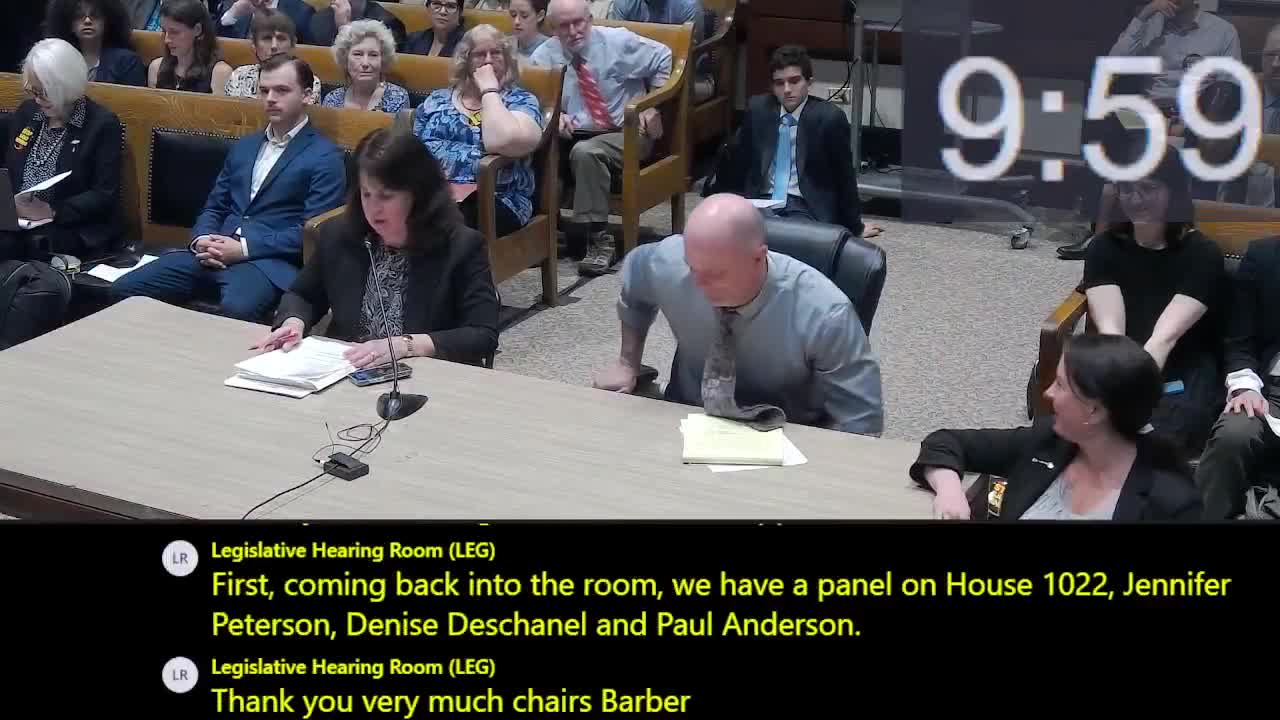
Jennifer Peterson of Mass Water Works said the bill would create recurring, predictable state revenue to support core projects — water mains, pump stations and tanks — and help communities pursue regional interconnections to solve PFAS contamination and capacity constraints. “Local ratepayers are already seeing large increases,” Peterson testified; the bill would relieve pressure on local rates by supplementing SRF loans and targeted grants.
Denise Deschano of the Massachusetts Water Environment Association described wastewater authorities facing multi-hundred-million-dollar consent-decree projects and rising biosolids disposal costs; she said SRF loan capacity is constrained and that replacement of critical assets is unaffordable for many towns without state support.
Speakers urged several policy changes in addition to funding: updated project scoring at MassDEP, review of interbasin transfer rules to streamline connections, workforce development and new scoring that favors reliability investments not always eligible for current programs. The bills would also require the Water Infrastructure Advisory Committee to meet more regularly and recommend revenue options.
Municipal leaders and Cape Cod water officials said rate increases of 20% or more have been adopted in some districts to pay for PFAS treatment and infrastructure; lawmakers asked how to balance local affordability with the need for substantial capital projects. Witnesses proposed a blend of SRF loans, targeted contract assistance, and limited rate-relief grants to avoid regressive impacts.
The committee took no vote; witnesses urged lawmakers to move the bill forward and to work with executive branch officials on a long-term funding plan.