Get Full Government Meeting Transcripts, Videos, & Alerts Forever!
Get email alerts on the Automated Enforcement topic
No spam. Unsubscribe anytime.
Lawmakers and advocates press for municipal opt‑in automated cameras for school zones, red lights and speed enforcement
Summary
Senators, representatives and a coalition of road‑safety groups told the Joint Committee on Transportation they support legislation that would let cities and towns opt in to automated enforcement — including school‑zone speed cameras and red‑light/speed cameras — to reduce crashes and protect pedestrians and schoolchildren.
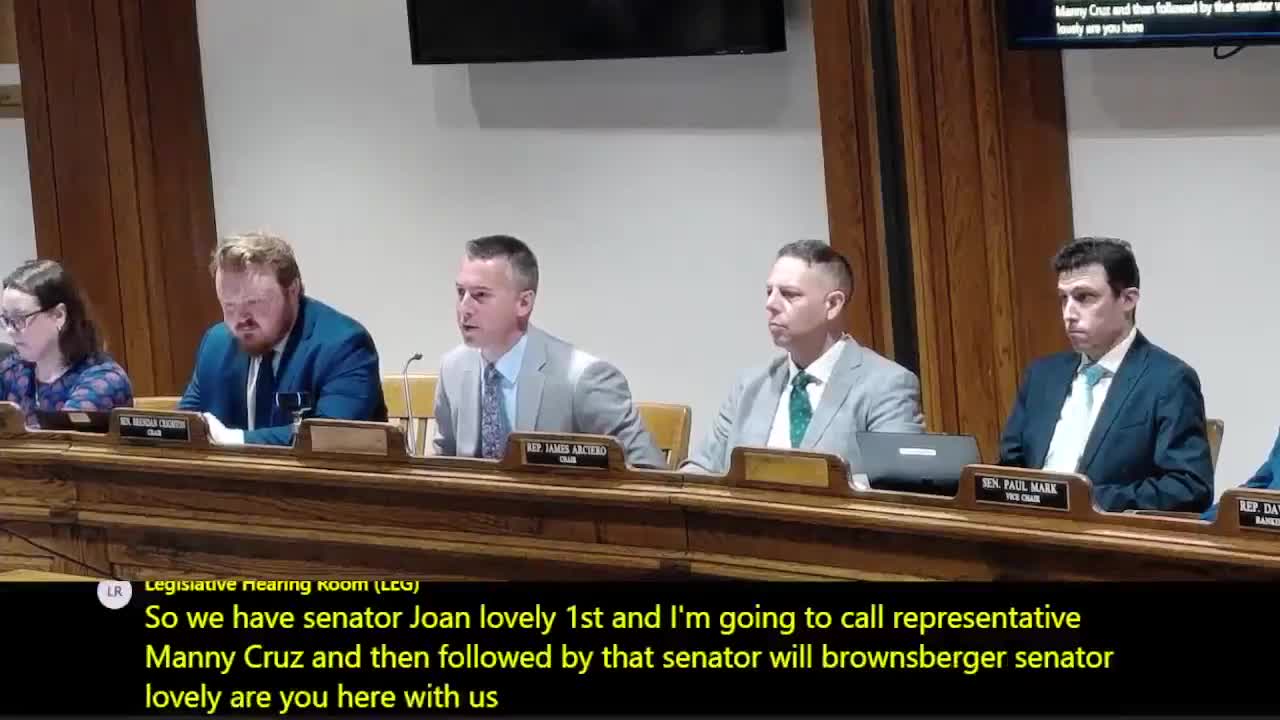
Senator Joan Lovely and Representative Manny Cruz urged the Joint Committee on Transportation to allow municipalities to use automated cameras in school zones and other targeted locations. "The city of Salem is dedicated to maintaining the safety of all school children," Senator Lovely told the committee while testifying in support of H.3905, the Salem authorization for automated enforcement in school zones. Representative Cruz described data from a local bus-cam pilot in which Salem recorded thousands of violations and said the program seeks to protect children and families.
Support for targeted municipal opt‑in programs came from a broad set of safety advocates. Representatives of WalkMassachusetts, MassBike, Transportation for Massachusetts and the Safe Roads Alliance cited national and international studies showing speed and red-light cameras reduce speeding and fatalities. WalkMassachusetts highlighted that 60.7% of pedestrian fatalities in 2024 occurred in environmental-justice census block groups and urged measures that reduce disproportionate harm.
Advocates and municipal officials described safeguards in the legislative drafts: towns must develop plans, conduct social and racial equity screening, provide public process and reporting to MassDOT, and publish camera locations. T for Mass and others described technological and privacy protections in the bills, including prohibitions on photographs of drivers, passengers and vehicle interiors and required destruction of photographic evidence after disposition.
Local officials and community groups from Somerville, Medford, Newton and other municipalities described neighborhood demand for enforcement where staffing and resources limit police traffic stops. "Automated traffic enforcement would help immensely with that," Somerville City Councilor Jake Wilson testified. Witnesses urged an opt-in approach, visible signage and public education prior to citations.
Sponsors and witnesses described disputes commonly raised — privacy, perceived revenue motives and constitutionality — and offered policy features to mitigate them, including civil citation frameworks, evidentiary rules and public reporting requirements. Advocates urged the committee to report the bills favorably and to allow local control over program design.