Get Full Government Meeting Transcripts, Videos, & Alerts Forever!
Get email alerts on the Private Wells topic
No spam. Unsubscribe anytime.
Lawmakers hear calls to require private well testing, vouchers for filters as PFAS and other contaminants spread
Summary
Public-health officials, municipal board members and service providers told a legislative hearing that Massachusetts needs statewide standards requiring private-well testing at transfer plus financial help for remediation after widespread PFAS and other contamination was described.
A suite of bills to expand protections for private drinking water wells drew support from public health groups, the state’s district attorney, municipal board-of-health members and nonprofit service providers at a Joint Committee hearing.
Representative Sean Connolly and Senator Eldridge were among lawmakers who framed the hearing as part of a broader push to ensure equitable access to safe drinking water for roughly 500,000 residents who rely on private wells. The proposals discussed included a mandatory testing requirement at time of property transfer (House Bill 9 28 / House Bill 900 / Senate bill 585 variants), funding mechanisms to help low-income homeowners cover remediation and a voucher program for point-of-use filtration promoted by District Attorney Marian Ryan.
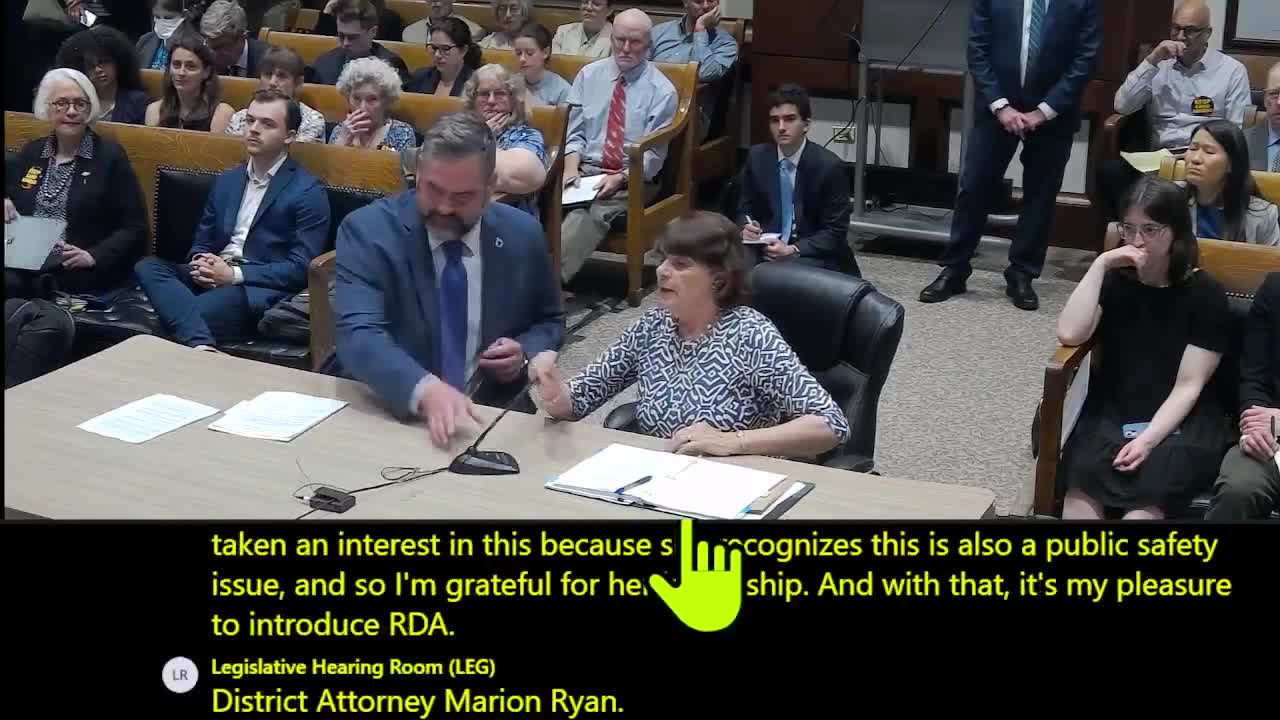
District Attorney Marian Ryan said a voucher program would give low-income residents access to certified filtration devices and help pay for periodic filter replacement. “The right to have clean drinking water is a human right. It is also an equity issue,” Ryan said, urging a favorable report for a program that would provide vouchers for devices and filter changes on an ongoing basis.
Service providers and public-health organizations presented testing data and case histories. RCAP Solutions presented a statewide sampling effort that found roughly one-third of private wells tested with at least one contaminant above a health standard; examples included nitrate, arsenic, uranium and PFAS. Jim Starbird of RCAP described cases where households only learned of dangerous well contaminants after years of exposure.
Medical testimony underscored public-health stakes. Dr. Bridal Lundberg of the Massachusetts Medical Society described the range of contaminants found in wells and the associated health risks, noting that children are especially susceptible to neurotoxic and developmental harms from lead and other contaminants.
Local board-of-health members told the committee that many boards lack resources and technical capacity to implement well-testing programs on their own and urged a statewide minimum standard. Chris Mitchell, a longtime professional geologist and local official in Harvard, said his town has adopted testing requirements for PFAS at real-estate transfer and that state guidance would help smaller boards act consistently.
On financing, witnesses proposed expanding a MassHousing septic-repair revolving loan program to cover remediation and suggested low-interest loans or targeted grants for households below income thresholds. The committee heard that point-of-use filtration systems for drinking and cooking can cost roughly $300–$1,000 installed with ongoing filter-replacement costs; whole-house solutions for certain contaminants (radon, uranium) are more expensive.
Proponents asked the committee to report the bills favorably but acknowledged implementation choices remain: which contaminants to test for, income eligibility for assistance programs, and whether a testing mandate should be at the point of sale. Supporters urged transparency and technical assistance to local boards and requested clarity on funding sources.
The committee did not vote at the hearing. Supporters asked the panel to advance the bills so the Legislature can consider a statutory, statewide approach to private well testing, remediation support and voucher-based filtration aid.