Get Full Government Meeting Transcripts, Videos, & Alerts Forever!
Get email alerts on the Pharmacy Access topic
No spam. Unsubscribe anytime.
Representative Worrell urges action on pharmacy closures that create 'deserts' in Black and Brown neighborhoods
Summary
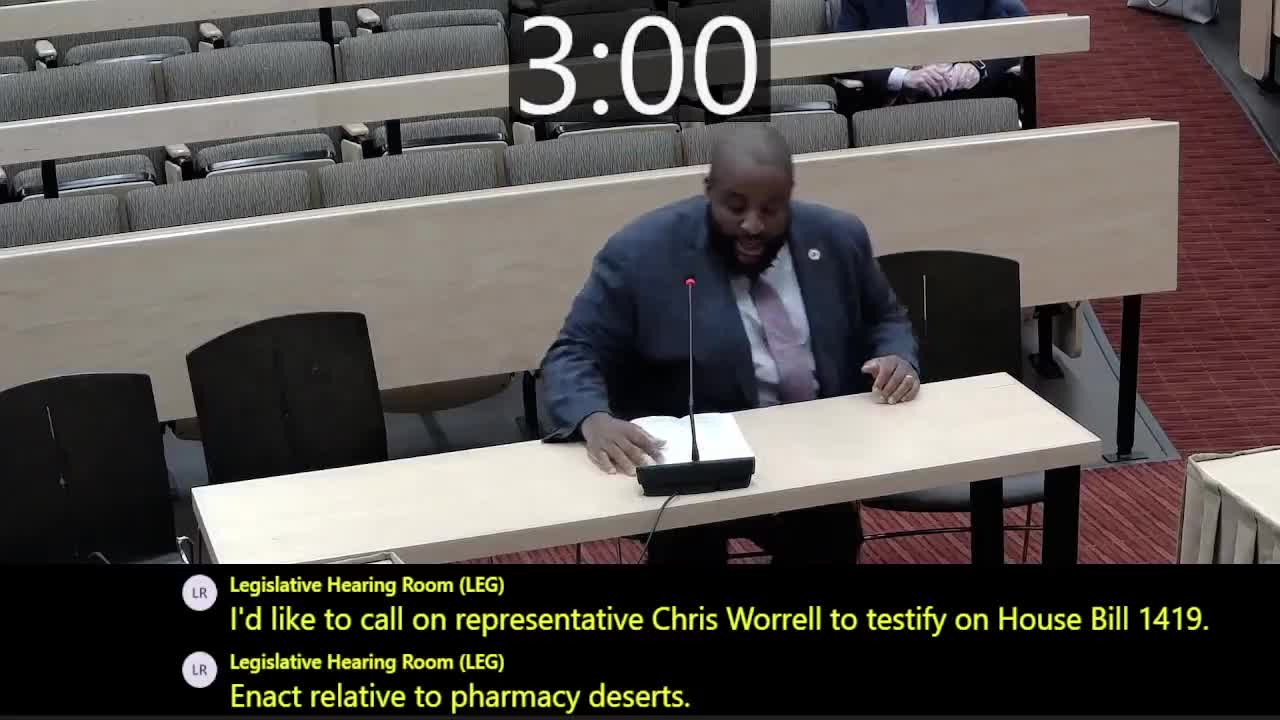
Representative Chris Worrell told the Joint Committee on Healthcare Finance that sudden pharmacy closures have left thousands of constituents — particularly in Black and Latino neighborhoods — without nearby access to medications for diabetes, hypertension and high cholesterol.
Representative Chris Worrell told the Joint Committee on Healthcare Finance that sudden pharmacy closures have left thousands of constituents — particularly in Black and Latino neighborhoods — without nearby access to medications for diabetes, hypertension and high cholesterol.
Worrell framed House Bill 14‑19 as a response to closures in his district, saying the Walgreens on Warren Street in Roxbury announced it would close on Martin Luther King Day with only a sign on the door. He said CHIA later estimated that nearly 3,000 patients were affected by that closure and that the top prescriptions filled at that location treated chronic diseases prevalent in the community.
Why it matters: Testimony emphasized that pharmacy access is a public‑health issue; sudden closures disproportionately affect older adults and people without reliable transportation, increasing the risk that patients will miss doses or discontinue essential therapies.
What the bill would do
- Direct the state to identify pharmacy deserts and evaluate their public‑health impacts. - Require notice and a public hearing when a closure would create a pharmacy desert, and a 90‑day notice amendment carried in prior sessions would be revived in new language.
Representative Worrell characterized this as a matter of equity and local health infrastructure, and urged the committee to report the bill out of committee. Committee members acknowledged the issue and noted similar closures across urban and rural Massachusetts.