Doctors, unions back bill to cap hospital CEO pay and require financial transparency
Loading...
Summary
Physicians, union leaders and hospital workers testified in favor of S.899/H.1398, which would cap hospital CEO pay at 50 times the lowest paid full‑time worker, require public disclosure of hospital assets and redirect penalties into a Medicaid reimbursement enhancement fund.
A coalition of physicians, resident doctors and labor leaders urged the Joint Committee on Healthcare Finance to give a favorable report to Senate Bill 899 and House Bill 13‑98, measures the witnesses said would increase transparency of hospital finances and limit excessive executive compensation.
The bills would require mandatory public reporting of hospital financial assets, cap annual CEO compensation at no more than 50 times a facility’s lowest paid full‑time employee, and impose penalties for hospitals that exceed specified operating margins; collected penalties would be deposited into a proposed Medicaid Reimbursement Enhancement Fund (MREF) to boost Medicaid rates and services.
Why it matters: Testifiers argued the measures would redirect hospital resources toward patient care and frontline staff — especially in safety‑net hospitals facing funding shortfalls — and make publicly funded hospitals more accountable to communities that rely on them.
Key testimony
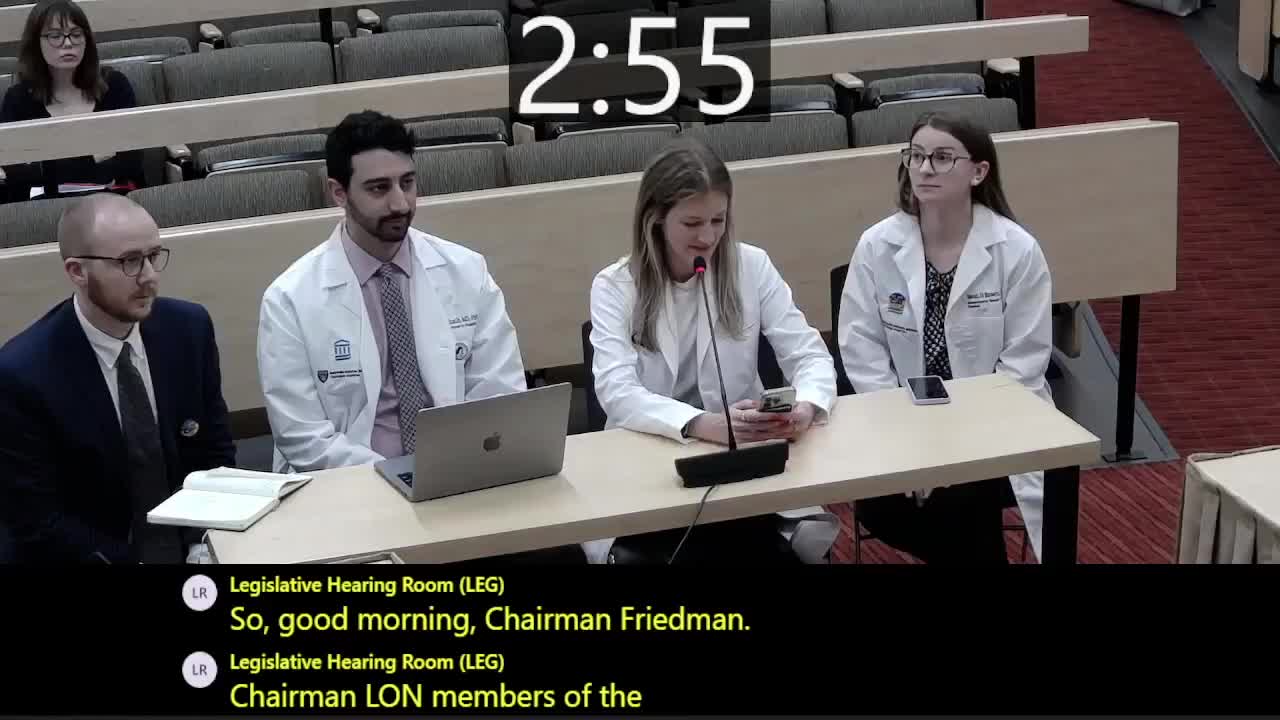
- Dr. Taylor Walker, president of Committee of Interns and Residents (CIR‑SEIU), described the measure as “not just good policy. It is really a moral imperative,” and cited data asserting many Massachusetts hospital CEOs earn more than 50 times their lowest paid workers.
- Sarah Brown, a Massachusetts General Hospital resident, said cuts to community programs and chaplaincy at Mass General Brigham occurred while “hospital CEO Anne Klibanski makes $6,000,000 per year,” and argued the bill’s penalty revenue could be used to improve Medicaid reimbursement rates for underserved hospitals.
- Union and labor representatives, including Lindsay Kenny (Massachusetts AFL‑CIO) and Jenny Pacillo (Worcester City Councilor, testifying as a community member), supported the bill as a way to reinvest hospital profits into frontline services and workers.
Committee questions and clarifications
Senator Cindy Friedman noted that even a large CEO pay reduction at a major system would not by itself solve a multi‑hundred‑million‑dollar safety‑net funding gap; Walker and other witnesses said the bill’s redirection to the MREF and disclosure requirements were intended as part of a broader set of reforms that also address private equity and market consolidation.
Concerns and implementation issues
Members asked how the cap would avoid perverse incentives such as converting employees to contractors to raise the CEO‑to‑lowest‑paid ratio; witnesses said such a shift would likely be more costly for employers but acknowledged the risk and urged complementary market‑oversight measures. Witnesses also discussed how penalties would be calculated and emphasized the need for publicly available asset data to ensure enforcement.
Ending
Supporters urged the committee to report the bill favorably, saying transparency and penalties tied to Medicaid improvements would better align hospital priorities with public interest. No committee vote was taken at the hearing.