Get Full Government Meeting Transcripts, Videos, & Alerts Forever!
Get email alerts on the Solar Tax Abatement topic
No spam. Unsubscribe anytime.
Young County discusses consultant, tax-abatement details for Titus Tabadero solar project
Summary
Commissioners met with consultant Jeff Snowden by Zoom to review how tax-abatement “pilot” agreements and equipment sales taxes could affect county revenue for the Titus Tabadero solar and battery project; no formal hiring decision was recorded.
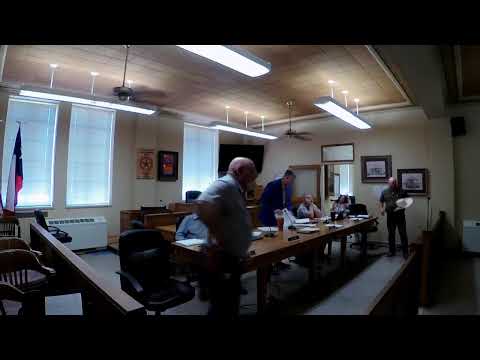
Young County Commissioners Court met on an item about possible consulting for tax-abatement negotiations for the Titus Tabadero solar farm project, holding a Zoom call with Jeff Snowden of Cabex Resources to review how abatements and sales taxes for equipment might affect county revenue.
The discussion centered on the structure of abatement “pilot” agreements and which parts of a solar-plus-storage project are taxable. Jeff Snowden described how some agreements allocate sales-taxable items — especially batteries — to the county where equipment is delivered and placed in service, potentially producing a one-time sales-tax event when equipment is activated. Snowden said batteries and other equipment can create significant taxable value over the life of a project: “That’s 900,000 taxable value for the goal of the project,” he said, and the county would collect sales tax when equipment is placed in service or turned on.
Why it matters: commissioners said they want to know whether negotiating an abatement could yield more county revenue than refusing an abatement altogether. Commissioner Wiley framed the issue as a trade-off between granting abatements to attract investment and maintaining tax revenue to support county services, noting that rising state property valuations limit the county’s ability to reduce tax rates. Commissioners discussed using a consultant to run numbers and negotiate terms, then reviewing any deal with county legal counsel before committing funds.
Key details discussed included how pilot percentages have changed in other agreements (from an initial 30% pilot share to lower pilot shares in some deals), the one-time nature of sales tax when equipment is delivered and placed in service, and separate calculations for batteries and storage capacity measured in megawatts-hours. When asked for a back-of-the-envelope figure per megawatt on a pilot, Snowden declined to finalize a number without further research but agreed to appear at a public hearing and to provide more detailed calculations.
No formal hiring motion or vote was recorded on the Zoom call. Commissioners said they would continue gathering numbers and proposals: one commissioner said the county had earlier considered counsel Lisonbee Bass for tax counsel but that person was retiring and unavailable; the court discussed the prospect of using a technical negotiator for numbers and separate legal counsel for contract review. The court indicated it would discuss consultant fees and payment behind the scenes.
The court also noted several other solar projects are seeking interconnection and development in Young County; commissioners said additional investment could expand the tax base and, in turn, could allow the county to lower its tax rate if state valuation changes do not offset those gains.
Ending: Commissioners agreed to pursue more detailed revenue estimates and to invite the consultant to a public hearing, but they made no formal commitment during the meeting.