Get Full Government Meeting Transcripts, Videos, & Alerts Forever!
Get email alerts on the Agriculture topic
No spam. Unsubscribe anytime.
Property appraiser, residents spar over agricultural classifications, inspections
Summary
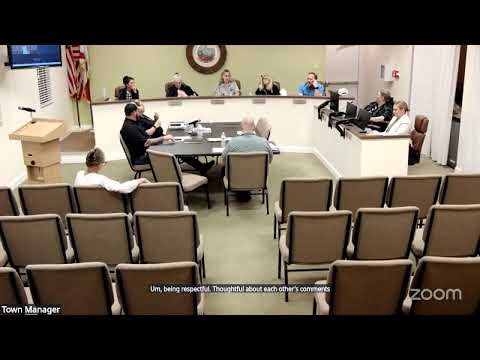
At a packed Town of Loxahatchee Groves meeting, Palm Beach County agricultural staff outlined how ag classifications work while residents and councilmembers pressed for clearer standards and local remedies after a year of contentious inspections.
Keith Alexander, who runs agricultural classification for the Palm Beach County Property Appraiser’s office, told the Town Council that county staff grant agricultural classification based on commercial agricultural use as of Jan. 1 and industry standards such as “24 hives an acre” for beekeepers.
The topic drew the longest public comment portion of the June 3 meeting as residents said recent inspections have been inconsistent and have harmed long‑time farms and horse operations.
“Typically, what we do is we look for the industry standard,” Alexander said. “If someone’s doing something different, they need to kinda let us know and maybe explain it to us so we understand.” He said his office uses aerial photos, site visits and industry standards to evaluate parcels and that buildings themselves are not discounted — only the land used in the operation is.
Residents and councilmembers pushed back. Several equestrians and livestock owners said beekeepers, horse trainers and small‑scale growers have seen different acreage standards applied at different times, choices that can change the tax treatment of their property and impose added costs. A number of speakers requested a local forum between Palm Beach County ag appraisers, town staff and a community working group to standardize expectations and make decisions more predictable.
“I was told horses are not grazing animals,” veterinarian Deborah Marshall said about an inspector’s comment she heard about a past case. “That is veterinary wrong. That is anatomically wrong.” Other residents described cases where driveways or shade houses were excluded from the acreage calculation and asked how to correct those determinations without a costly appeal.
Alexander said there is a formal appeals process — an administrative petition before a magistrate — and encouraged residents with disagreements to present their data to his office first. He also said his office will review and update guidance online and that he is open to meeting with town representatives to discuss county standards.
Council members asked staff to pursue a local workshop, inviting the property appraiser’s ag staff and local ag experts to develop clearer written guidance the town can publish for residents. The council asked staff to return with options for such a forum and, if possible, a list of commonly used industry standards (by commodity) for the town’s website.
Residents said they want clearer, consistent inspections, more training for new appraisers, and interim steps before a property is pushed into an adversarial, expensive hearing.
Council and staff agreed on a next step: town staff will reach out to Palm Beach County ag staff to arrange a public workshop in July or August where common classifications (horses, cattle, beehives, small-scale nurseries) and the county’s Jan. 1 rule will be explained and an FAQ for residents will be drafted.
Ending: The town manager and property appraiser’s office will coordinate dates and a preliminary list of topics; residents were asked to submit specific examples to staff before the workshop so staff and appraiser personnel can prepare.