Get Full Government Meeting Transcripts, Videos, & Alerts Forever!
Get email alerts on the Recreation Infrastructure topic
No spam. Unsubscribe anytime.
Rio Grande City OKs ordinance to form golf-course committee after heated public comment
Summary
The City Commission voted unanimously on first reading to create a golf course committee that will research feasibility, costs, water needs and potential public‑private partnerships after public comment raised concerns about cost and water use.
The Rio Grande City Commission on May 20 approved on first reading an ordinance to create a golf-course committee to study whether building a golf facility in the city is feasible.
The ordinance directs the new committee to analyze costs, water requirements, funding partners and maintenance obligations before the commission will consider committing public money. The committee will include representatives from the city and invited public and private partners, and report back with a recommendation.
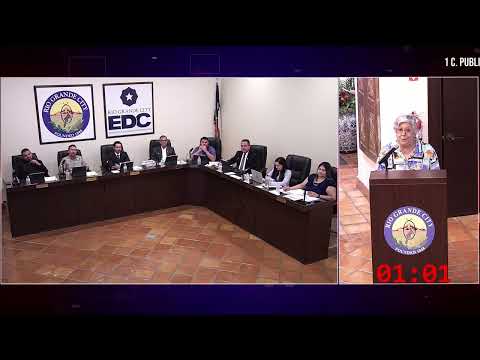
The motion to approve the ordinance’s first reading passed unanimously after more than an hour of public comment and discussion. In public comment Maria Ramirez, who identified herself as a former schoolteacher and community advocate, warned the commission about the area’s long history of failed golf-course ventures and the community’s limited water supply: “A golf course needs water. We are in the midst of a long drought with no solution in mind in sight.” Mayor Gilbert Falcone responded that the committee is meant to gather facts before any spending: “This is not a city project entirely. This is a project ambition where we’re inviting the county, the school district, private investors, and the city as well.”
Commissioners and staff emphasized that the committee’s work is fact-finding, not a commitment to build. City officials repeatedly said the city lacks the funds to unilaterally build and maintain a full course and that private investment and intergovernmental collaboration would be required. The proposed committee’s tasks include estimating construction and maintenance costs, water demand, and potential private and public contributions; the commission said it will perform a cost‑benefit analysis once the committee reports back.
Supporters framing the idea as forward‑looking described it as one of many possibilities to diversify recreational amenities; opponents at public comment said they feared water use, limited local affordability and past local failures of private golf projects.
The ordinance passed first reading; commissioners said they expect the committee’s report to determine whether the project advances. No construction or expenditure was approved. The item will return to the commission later if the committee recommends proceeding.