Get Full Government Meeting Transcripts, Videos, & Alerts Forever!
Get email alerts on the Behavioral Health topic
No spam. Unsubscribe anytime.
Committee advances bill to add partial-hospitalization rate and expand intensive outpatient coverage for behavioral health
Summary
The committee adopted amendments and reported Senate Bill 96, which directs Medicaid reimbursement for partial-hospitalization mental-health services at freestanding inpatient psychiatric hospitals at 100% of Medicare rates (subject to federal approval and appropriation) and adds intensive-outpatient coverage for licensed outpatient clinics.
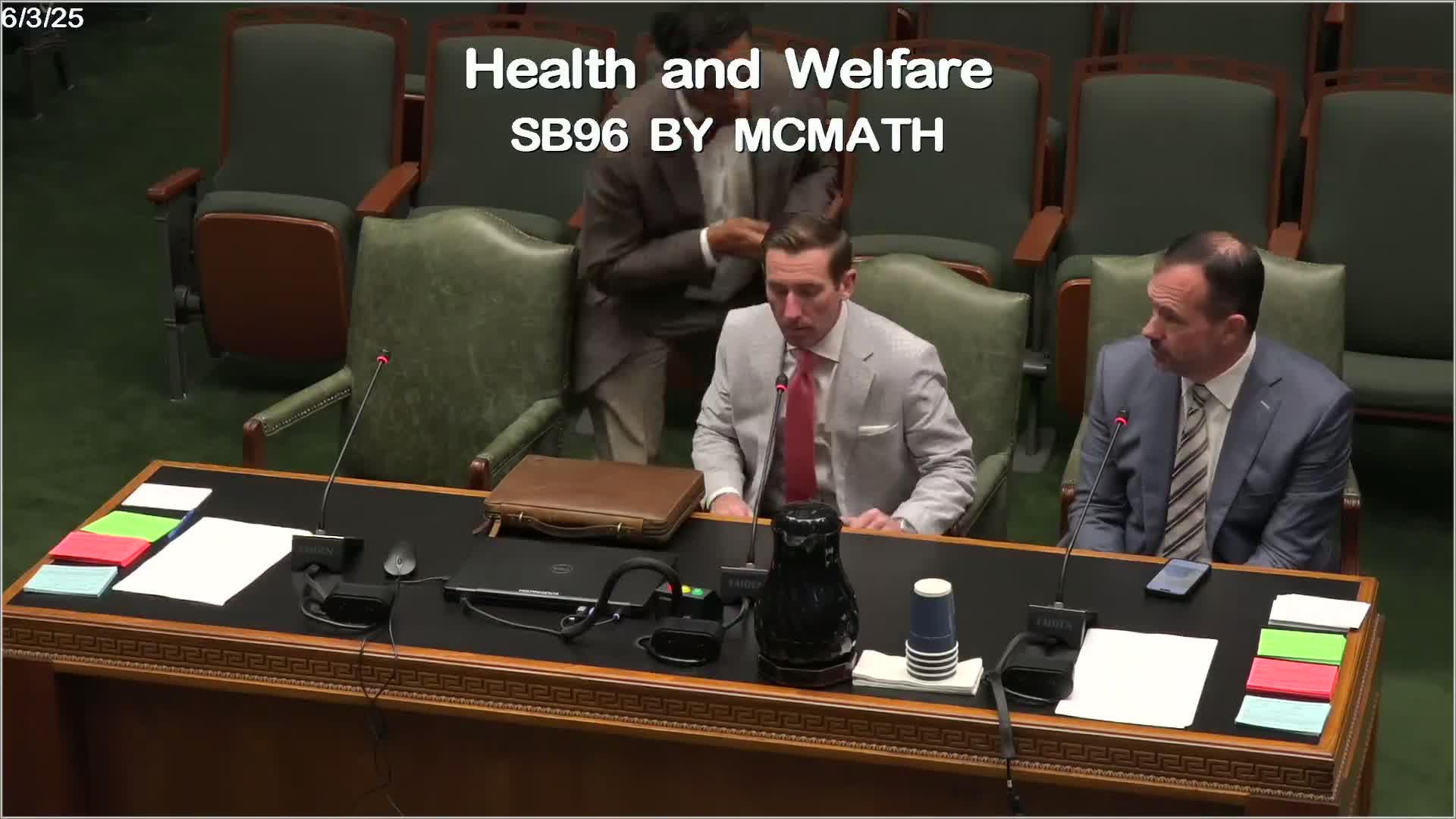
Senate Bill 96 was reported favorably with committee amendments that would add Medicaid reimbursement for partial-hospitalization-program (PHP) services provided at freestanding inpatient psychiatric hospitals at 100% of Medicare rates, subject to federal approval and availability of funds. During committee discussion the sponsor and provider witnesses said the service creates a step-down level of care between inpatient hospitalization and outpatient intensive outpatient program (IOP) services, and that peer states’ pilots and studies show reductions in readmissions and emergency-department usage.
Stuart Archer, CEO of a statewide behavioral-health provider, and other witnesses said many Medicaid patients currently have no PHP option that keeps them engaged after discharge; an appropriate PHP, they said, brings patients in for several hours daily for therapy, medication management and care coordination and reduces the cycle of repeated short hospitalizations. The bill as amended also added Medicaid coverage for intensive outpatient services at licensed outpatient clinics (sponsor and committee amendment) and limited the initial reimbursement change to freestanding inpatient psychiatric hospitals while the department works through utilization and budgeting questions.
Amendments adopted by the committee include a subject-to-appropriation clause and language that requires LDH to identify funds within its current budget before implementing increased reimbursement. Committee members and providers discussed longer-term needs — including more beds and extended-care placements for people with severe, persistent illness — but the amendment package aimed to create a pilotable reimbursement route that the state can expand if the program reduces overall costs.
Committee members expressed support for the policy goal and moved the bill forward. Representative Egan and others made favorable-passage motions; the bill is now eligible for appropriations and further consideration in the lower chamber.