Get Full Government Meeting Transcripts, Videos, & Alerts Forever!
Get email alerts on the Energy Grid Pricing Pjm topic
No spam. Unsubscribe anytime.
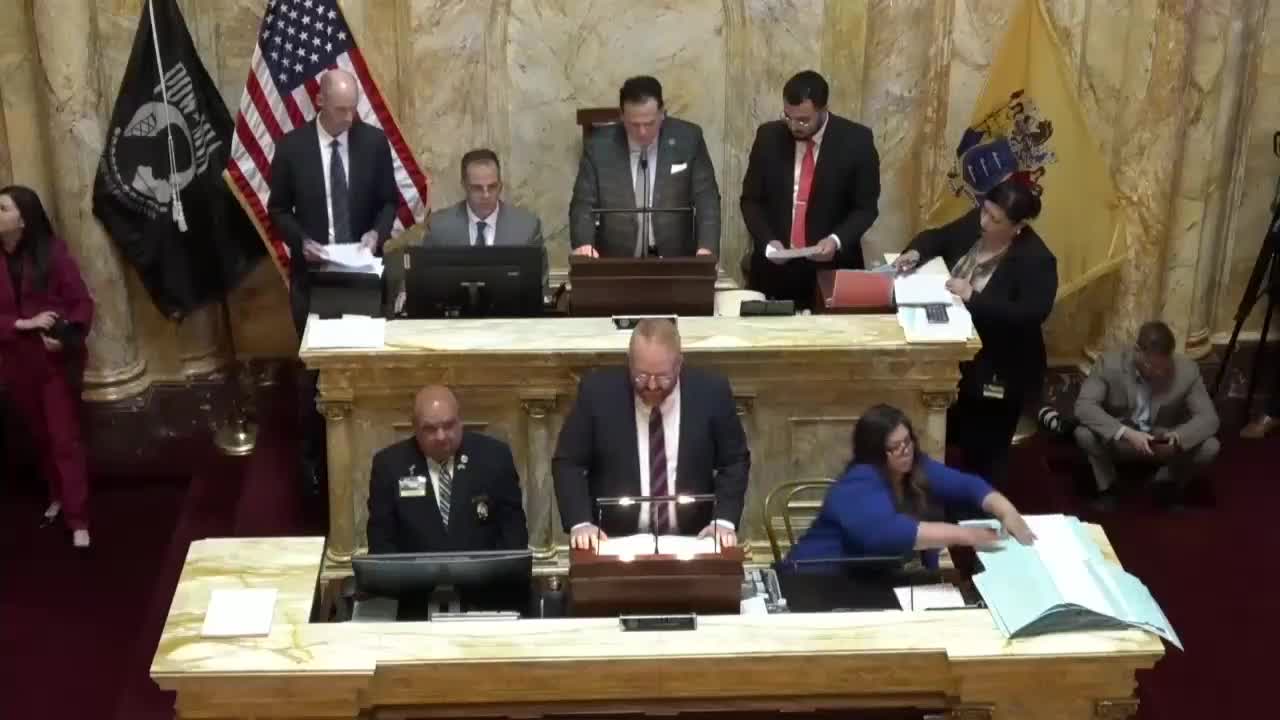
Senate approves resolution directing BPU to investigate PJM after heated debate over auction rules
Summary
The New Jersey Senate passed Senate Joint Resolution 154 directing the Board of Public Utilities to investigate PJM Interconnection LLC’s pricing model after an extended floor debate about whether the investigation should instead be conducted by the Legislature’s select committee on rising energy costs.
The New Jersey State Senate voted to pass Senate Joint Resolution 154 directing the New Jersey Board of Public Utilities (BPU) to investigate PJM Interconnection LLC’s reliable pricing model and urging reforms after prolonged floor debate. The resolution passed 25-12.
The measure, introduced by Senator Bersicelli and Senator Greenstein, asks the BPU to examine PJM’s auction rules and pricing practices and to report back to the Legislature. Senator Bersicelli framed the resolution as a response to an “impending energy crisis,” saying, “We are at the mercy of the market, and that is why our energy costs are going up.”
Why it matters: The resolution responds to a capacity-auction result that lawmakers said will raise electricity bills for New Jersey residents this summer. Senators on both sides said constituents are already receiving warnings of large rate increases; several speakers urged quick action to clarify responsibility among PJM, FERC and state regulators.
On the floor, a competing amendment proposed by Senator Buco would have transferred investigative authority from the BPU to the Legislature’s bicameral, bipartisan Select Committee on Rising Energy Costs. Senator Buco said the select committee, which held hearings earlier this year, is “the body that was created to get to the bottom of our energy crisis” and suggested expanding the probe beyond PJM to include state policies and agencies.
Senator Ruiz moved to table the amendment to transfer the investigation to the select committee; that motion to table passed 21-15. After additional debate, Senator Bersicelli moved the joint resolution as printed and the chamber recorded the final vote: 25 in favor, 12 opposed. The clerk announced the resolution passed and adopted.
Major themes in debate included: PJM’s auction mechanics and verification of bids; whether the BPU, an executive agency, has the independence and credibility to lead an investigation of an entity whose conduct affects the state’s ratepayers; and whether the Legislature should assert primary oversight. Senator Testa warned against giving the BPU investigative authority, saying allowing the agency to investigate PJM “is akin to allowing the fox to watch the hen house.” Senator Smith described the most recent auction as “a nuclear disaster for this state,” and called for auction reforms and expedited remedies.
The Senate record shows several senators arguing the BPU has intimate, on-the-ground knowledge and legal tools needed for a near-term inquiry; others said a legislative select committee should lead a broader, long-term fact-finding process. Senator Sarlo said he supported BPU leading an initial inquiry because of the agency’s access and resources, but he did not rule out a future legislative role in long-term reforms.
The resolution does not itself change statute, appropriate funds, or order litigation; it directs BPU to investigate and to report. The transcript record shows additional, ongoing legislative activity related to energy policy referenced during the debate, including pending bills and prior select-committee hearings.
The Senate vote and the loud floor debate make investigation and potential reforms an item for near-term follow-up by state officials and legislative committees.