Get Full Government Meeting Transcripts, Videos, & Alerts Forever!
Get email alerts on the State Legislation topic
No spam. Unsubscribe anytime.
State legislative session brought funding wins for Newcastle, lobbyist and representative tell council
Summary
The city lobbyist and the newly appointed 40th District representative briefed council on the 2025 legislative session: operating and capital budgets, $335,000 for Lake Boren Park access, REET flexibility for regional housing, new co‑responder training and small grants, and other bills with potential local effects.
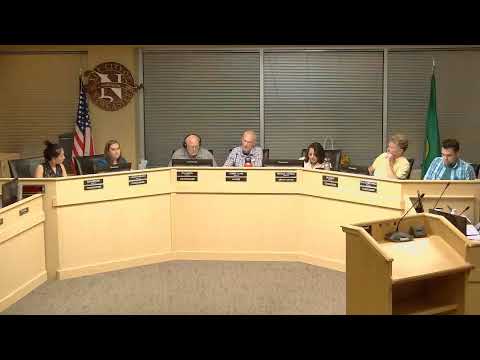
City lobbyist Shelley Holder and Representative Janice Zahn briefed the Newcastle City Council on results from the 2025 Washington State legislative session on June 3, describing a mix of budgetary wins and policy changes relevant to the city.
Holder, who represented the city in Olympia this session, summarized the budgets and outcomes and said the 2025 session — the first of a two‑year biennium — produced a new operating budget of about $77.8 billion, a $7.5 billion capital budget and a $15.5 billion transportation budget. She said the legislature adopted roughly $3.2 billion in new revenue for transportation and left about $2.3 billion in reserves.
Holder told the council the city secured $335,000 for Lake Boren Park North End access improvements “due to the leadership of our 40th District legislators,” and praised collaboration that allowed House Bill 1791 to pass; that bill permits cities to dedicate real‑estate‑excise‑tax (REET) revenues to regional affordable housing projects outside city limits, a change from prior law.
Representative Janice Zahn, appointed during the current legislative cycle, said she met weekly with city staff and the lobbyist to track Newcastle priorities. Zahn described several bills of interest: House Bill 1811 establishes training pathways and a co‑responder workforce for behavioral health crisis response and the operating budget included a $4 million grant program (administered through the Association of Washington Cities) for communities to set up alternative response programs; House Bill 2015 created a local option sales tax authority for certain criminal justice purposes (and the operating budget included $100 million for jurisdictions to support law enforcement hiring).
Zahn noted transportation tradeoffs in the capital budget and said some transportation projects were deferred to preserve reserves; she said funding was secured to complete the SR‑405 widening project that directly affects Newcastle residents.
Shelley Holder also described other policy changes of likely local relevance: a bill on lot‑splitting (affecting code updates), a transit‑oriented development bill that clarified frequent transit definitions, and Senate Bill 5509 on childcare facility siting. Zahn called attention to House Bill 5148 related to Growth Management Act housing‑element compliance and said the legislature allocated $600 million to the Housing Trust Fund.
Councilors asked about how small cities like Newcastle could access co‑responder and other funds. Holder and Zahn said the $4 million AWC grant program is one‑time start‑up money and that House Bill 2015 provides a local ongoing sales‑tax option city councils could consider to fund public safety or co‑responder models, while ongoing program costs remain a local budgeting challenge.