Get Full Government Meeting Transcripts, Videos, & Alerts Forever!
Get email alerts on the Agriculture Wildlife topic
No spam. Unsubscribe anytime.
House passes bill to boost livestock compensation, expand nonlethal grants amid wolf conflicts
Summary
The House passed Senate Bill 777 to increase compensation multipliers for confirmed wolf depredation, narrow compensation to confirmed and probable losses, and raise available nonlethal deterrence grant shares, while preserving wolf recovery goals, sponsors said.
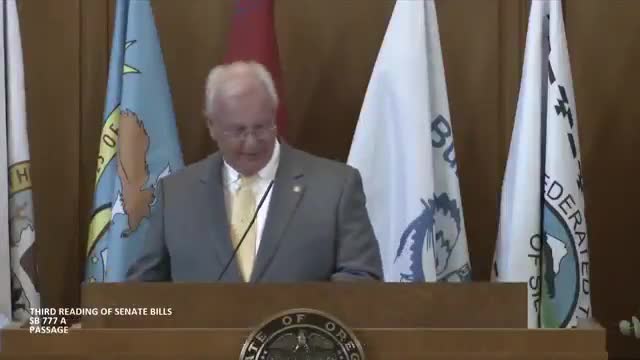
The Oregon House passed Senate Bill 777, legislation that changes how the state compensates livestock owners for wolf depredation and increases support for nonlethal deterrence.
Sponsor Representative Bobby Levy told colleagues the bill “finally gives our ranchers families the respect and support and protection they have long been asking for,” arguing current compensation procedures leave producers undercompensated and sometimes unwilling to report losses. Levy said the bill targets compensation to confirmed and probable depredations (removing payment for missing animals), authorizes multipliers up to five times fair market value for certain animals, establishes a per-animal cap, and raises the share of grant funding for nonlethal deterrence from 30% to 50%.
Supporters emphasized the bill’s dual approach: increasing realistic payouts for confirmed losses while prioritizing prevention through higher nonlethal grants for fencing, range riders, guard animals and lighting. Representative Helm — who helped lead committee negotiations — said the measure is bipartisan and intended to bring ranchers back into a compensation program many had abandoned as ineffective. The bill’s supporters described the package as shaped through months of negotiation with ranchers, counties, wildlife advocates and conservation groups; sponsors noted it passed its Senate committee unanimously and the Senate floor with a single no vote.
Opponents and some conservation-focused members raised concerns about long-term wolf recovery and the scope of the changes; representatives stressed the law would still rely on the Oregon Department of Fish and Wildlife (ODFW) to confirm depredations, and that the bill does not call for wolf elimination. The floor debate included references to outside research, including a UC Davis study cited for economic impact calculations.
The House voted to pass the bill; the clerk declared Senate Bill 777 passed after the required majority. The bill assigns duties to counties and ODFW for program administration and clarifies eligibility and compensation calculations.