Get Full Government Meeting Transcripts, Videos, & Alerts Forever!
Get email alerts on the Tribal Relations topic
No spam. Unsubscribe anytime.
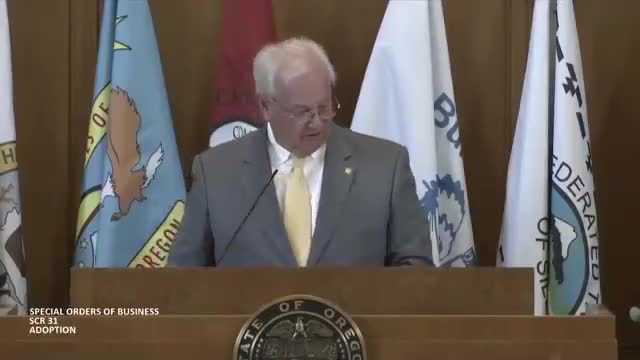
Oregon House adopts resolution marking 50 years of Legislative Commission on Indian Services
Summary
The Oregon House adopted Senate Concurrent Resolution 31 commemorating the 50th anniversary of the Legislative Commission on Indian Services and reaffirming commitments to tribal consultation and sovereignty.
The Oregon House on the floor adopted Senate Concurrent Resolution 31, commemorating the 50th anniversary of the Legislative Commission on Indian Services (LCIS) and reaffirming the Legislative Assembly’s commitment to consult and work with Oregon’s nine federally recognized tribes.
The resolution recognizes LCIS as a permanent forum created in 1975 and highlights collaboration between state agencies and tribal governments on healthcare, education, natural resources and cultural-resource management. Representative Sanchez, lead carrier of the resolution, urged colleagues to “commit to respecting the tribes as independent sovereign nations.”
Members of the House described LCIS as a critical vehicle for consultation. Representative McIntyre, listed as a co-carrier, said the commission provides a model other states seek to replicate. Representative Helm thanked LCIS and singled out progress on water-related consultation, distinguishing “small-c consultation” (informal outreach) from “big-C consultation” (government-to-government relationships). Representatives across the chamber noted LCIS’s role in monitoring legislation affecting tribal communities and in convening agency representatives for tribal-state discussion.
The resolution text referenced the 1975 statute that created LCIS and the nine federally recognized tribes of Oregon by name. Representative Sanchez also described a task force on tribal consultation she has created to further improve how the Legislative Assembly consults with tribes.
The resolution passed on a recorded voice vote and was declared adopted. The House also observed remarks recognizing tribal leaders and guests who attended the session.
Why it matters: LCIS serves as a formal channel for tribes to inform state policymaking; the resolution signals legislative support for continued government-to-government consultation and for work to improve state-tribal relationships going forward.