Get Full Government Meeting Transcripts, Videos, & Alerts Forever!
Get email alerts on the Water Rights Transfers topic
No spam. Unsubscribe anytime.
Senate committee hears competing views on SB 11 53 to screen certain water-right transfers for harm to fish habitat and water quality
Summary
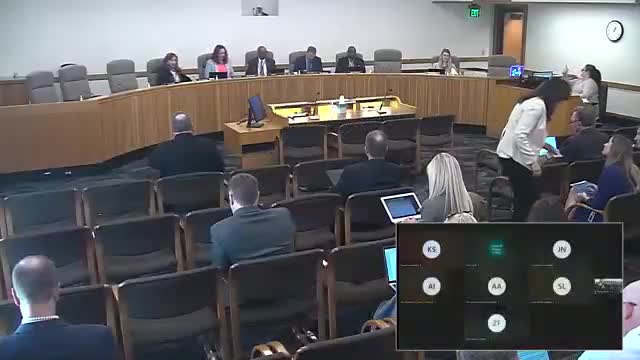
Senate committee members on June 3 heard hours of testimony on Senate Bill 11 53, a governor‑backed measure that would add a limited environmental screen and tribal consultation to some water‑right transfer reviews to block transfers that reduce streamflow and harm fish habitat or water quality.
Senate committee members on Tuesday, June 3, heard hours of testimony for and against Senate Bill 11 53, a governor-backed measure that would prohibit Water Resources Department approvals of certain water-right transfer applications when the change would reduce streamflow in ways that harm habitat for sensitive, threatened or endangered fish or worsen water-quality impaired streams.
The measure, as explained by Dexter Johnson, legislative counsel to the panel, and other witnesses, would insert the same environmental standard into multiple existing transfer procedures, allow federally recognized tribes to request a formal role in reviewing transfers in specific counties, and give the Water Resources Department authority to place conditions on approvals to avoid or mitigate harms. The bill’s dash-5 amendment, posted the morning of the hearing, narrows the proposal to specific high-risk transfers and adds reporting requirements to the legislature for 2026 and 2028.
Why it matters: Under current Oregon law, the department considers whether a proposed transfer injures other water-right holders or enlarges the right but does not evaluate public or environmental interests for many transfers. Supporters say that gap lets some transfers reduce flows on unprotected stream reaches, with potential negative effects on fish and on water quality dilution capacity for permitted discharges. Opponents say the bill’s language is vague, would slow transfers, increase litigation and impose disproportionate burdens on family farmers and some special districts.
Details of the proposal
Dexter Johnson, legislative counsel, called the dash-5 amendment “the guts of the bill,” saying it repeats a targeted standard across several statutory transfer pathways. The test would apply only to certain transfers — notably moving a point of diversion upstream or moving a groundwater point of appropriation to within a quarter mile of a stream — and would not apply where the change implements an aquatic habitat restoration or protection project or where an in-stream water right already exists for the reach. Johnson noted section 10 would let the department attach conditions to approvals and section 20 would require reports to the legislature in winter 2026 and 2028.
Chandra Ferrari, Natural Resources Policy Advisor for the governor’s office, summarized transfer mechanics and the bill’s aims: “When a water user asks the state to change its water right, the Water Resources Department must find ... that the change will not injure another existing water right holder. The public and tribal impacts associated with the change are not currently considered in the process.” Ferrari described SB 11 53 as a narrowly targeted effort to close that gap for high‑risk transfers.
Tribal consultation and conditioning authority were repeatedly cited by supporters as central improvements. Josh Studen, an attorney representing the Confederated Tribes of the Warm Springs Reservation of Oregon, said the tribal provisions are “an important step” that, paired with conditioning authority, would allow the department, in consultation with tribes, to minimize injury to tribal sovereign rights and interests.
Arguments from supporters
Supporters from environmental and conservation organizations told the committee the bill is modest and focused. Kaylin Barter, Water Policy Director for the Wild Salmon Center, said SB 11 53 “safeguards fish habitat” by adding an environmental screen to a narrow subset of non‑municipal transfers. Kimberly Priestley of WaterWatch of Oregon said the change is long overdue and that similar standards have been adopted in other Western states. The Nature Conservancy’s Zach Fried and other witnesses emphasized basin‑specific rulemaking and the bill’s process provisions intended to avoid agency delay.
Arguments from opponents
Irrigation districts, farm groups and some public water suppliers opposed the bill as drafted. Steve Shropshire, a water lawyer representing the Oregon Association of Nurseries, described the bill’s new test as vague and likely to create litigation and fiscal costs. The Oregon Farm Bureau’s Greg Addington and the Oregon Water Resources Congress’s April Snell said the bill would add uncertainty to a transfer system farmers rely on to respond to drought, well failure and changing conditions.
Todd Nash, State Senator (District 29), raised a policy concern about the phrase “contribute to a reduction in flow,” saying it is easy to assert and hard to measure: “you could go to the Columbia River, dip a teaspoon in, throw it over your shoulder ... and you contributed to the flow,” he said, arguing that the standard as drafted could invite litigation.
Municipal exemption and equity concerns
The dash‑5 amendment includes an exemption for municipal water rights as currently defined in statute; several municipal or public‑system representatives said that exemption reflects the additional regulatory reviews municipalities already undergo. Nikki Iverson of the League of Oregon Cities and Mark Landauer of the Special Districts Association of Oregon said municipal transfers typically trigger other environmental permits and mitigation. Some public water suppliers opposed a perceived inequity: Gerard (J.R.) Cook of the Northeast Oregon Water Association said his region’s public and other diversions face multiple federal and state reviews and asked that the bill not create a framework that advantages some public entities over others.
Process, timing and next steps
Several lawmakers and witnesses criticized the timing and pace. Senator Kathleen Taylor (District 21), one of the bill sponsors, urged support and said the bill has been narrowed through negotiations. Opponents and some committee members said the large dash‑5 amendment, released the morning of the hearing, provided insufficient time for review; committee members noted a vote on the bill was scheduled for the following day. No formal action or vote occurred during the hearing.
Evidence, reporting and rulemaking
The bill would require the Water Resources Department to issue written findings with its decisions on affected transfers and authorizes the agency to adopt rules, establish basin‑specific processes and set timelines intended to keep transfer reviews consistent with existing procedures. Section 20 would require two legislative reports (winter 2026 and 2028) on implementation effects, according to Johnson’s remarks.
What the hearing did not resolve
No examples were produced at the hearing that the committee accepted as clear, documented instances of harm caused by transfers that would have been prevented only by this bill. Opponents said none had been shown; proponents said the statutory gap nevertheless leaves some reaches unprotected. The committee did not vote; bill sponsors and stakeholders said they anticipate further amendment and negotiation.
Public comment and participation
The hearing drew dozens of witnesses representing tribes, conservation groups, municipal utilities, irrigation districts, farm and nursery interests and individual well drillers and landowners. Witnesses described extensive prior stakeholder work: the governor’s office reported more than 100 stakeholder conversations and some earlier public hearings and written testimony on the subject. Committee members and several public speakers raised concerns about the short timeframe for reviewing the amendment that was posted the same day as the hearing.
Next steps
The committee closed the public hearing after testimony and indicated further consideration, with a vote that had been scheduled for the next day at the time of the hearing. No vote or formal committee action on SB 11 53 occurred during the June 3 session.