Get Full Government Meeting Transcripts, Videos, & Alerts Forever!
Get email alerts on the Nicotine Tobacco Regulation topic
No spam. Unsubscribe anytime.
Committee weighs nicotine-product regulation and civil penalty framework; work session carried over
Summary
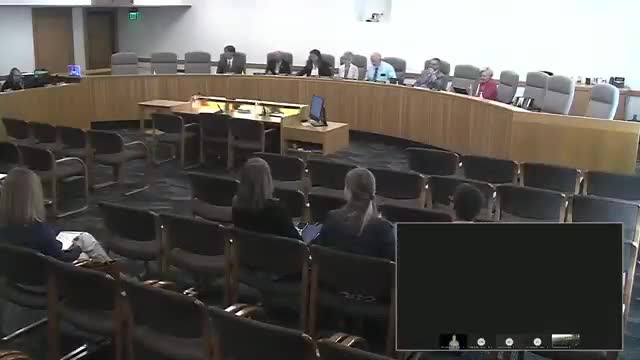
The House Committee on Revenue on June 3 discussed amendments to House Bill 2528A to bring nicotine products under tobacco regulation and to move enforcement from criminal penalties to a civil penalty regime; the Oregon Health Authority asked for rulemaking flexibility and the committee carried the work session over to consider late amendments.
The House Committee on Revenue on June 3 considered multiple amendments to House Bill 2528A, which would add nicotine derived from any source to the statutory definition of tobacco products for purposes of regulation and (in earlier drafts) taxation. Sponsors described several amendments posted to the record: a version that removes taxation components (A3), a penalty-schedule amendment (A5) that follows the current OHA graduated civil-penalty approach, a rulemaking-scope amendment (A4) to narrow regulatory intent, and a technical exclusion (A6) to avoid regulating common vegetables that contain trace nicotine.
Representative Rasheed (transcript: Rep Rushdie) described the A6 language as intended to avoid catching tomatoes, potatoes or eggplants in the definition, and said an additional amendment proposing a tax to replace the existing 25 cents per-10-unit tax was forthcoming; sponsor estimates for that tax projected roughly $5 million to $5.5 million annually under an illustrative sales volume.
Oregon Health Authority staff told the committee they supported the A3 approach to align statutes with OHA's civil enforcement framework and cautioned that the A4/A5/A6 package could be redundant or have unintended consequences. Philip Schmidt, OHA Government Relations Director, and Sarah Wiley, manager of OHA's Tobacco Retail License Program, said OHA developed a graduated civil-penalty schedule through a Rules Advisory Committee that included retailers and other stakeholders and that placing a fixed penalty schedule in statute could remove the agency's capacity for advisory-consultation and periodic adjustment.
Committee members asked whether penalties in statute would prevent OHA from using its existing Rules Advisory Committee process; OHA confirmed it would follow the agency's standard rulemaking process and that the existing rule-based graduated schedule was developed with stakeholder input. Because new amendments were posted late in the day and at least one additional amendment was expected, Chair Nathanson carried the work session over to the next day so the committee could review new materials.