Get Full Government Meeting Transcripts, Videos, & Alerts Forever!
Get email alerts on the Property Tax Modernization topic
No spam. Unsubscribe anytime.
Committee greenlights study directive on Measures 5 and 50; LRO to report options for property tax modernization
Summary
The House Committee on Revenue adopted an amendment to House Bill 2321 directing the Legislative Revenue Office to produce a report that summarizes the current property tax system and options to modernize it, with input requested from local governments and organizations representing cities and counties.
On June 3 the House Committee on Revenue adopted an amendment to House Bill 2321 that replaces the introduced bill and directs the Legislative Revenue Office to prepare a report describing Oregon's current property tax system and options to modernize it, including an overview of the effects of Measures 5 and 50. The amendment would require the LRO report to be presented to the Legislature by Dec. 1, 2026.
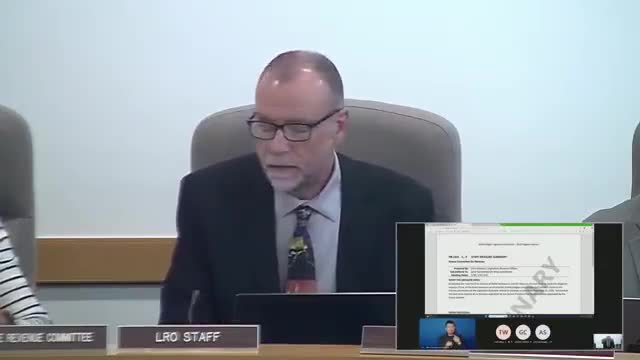
Committee staff said the dash-1 and dash-2 amendments are nearly identical; the dash-2 directs LRO to compile information using organizations that represent cities and counties rather than relying only on information gathered by legislators. Chair Nathanson said the intent of the amendment is to start a broad, inclusive process to examine the systemic impacts of Measures 5 and 50 rather than to prescribe specific reforms.
Testimony came from a range of local officials and advocates. Eric Jerome of Eugene said the city has faced revenue constraints and supported the bill and amendment, and Marcia Kelly, speaking from experience on special districts, urged that special districts be included in the study. Jenna Jones of the League of Oregon Cities said the League views property tax modernization as a high priority and welcomed the conversation. Justin Lowe of the Association of Oregon Counties testified in a neutral capacity and urged that counties be included, noting that 60% of counties anticipate budget cuts in the upcoming fiscal year and that Measure 5 and 50's permanent growth limits reflect an economic era different from today.
Chris Nelson of Common Ground Oregon-Washington urged the committee to ensure the study examines the capitalization and distributional effects of the current assessed-value system and suggested land-value taxation as a policy option for consideration. Committee members emphasized that the amendment creates a process for a broad conversation rather than prescribes outcomes and adopted the dash-2 amendment. The committee then moved House Bill 2321 as amended to the floor with a due-pass recommendation and rescinded the subsequent referral to the Joint Committee on Ways and Means. Representative Evans was identified as the carrier subject to his agreement.