Get Full Government Meeting Transcripts, Videos, & Alerts Forever!
Get email alerts on the Solid Waste Operations topic
No spam. Unsubscribe anytime.
Solid Waste Director reports diversion gains, limits mattress drop-offs and backs county support for producer-funded recycling
Summary
Solid Waste Director Bishop Wagner reported May recycling/diversion totals, described a new limit on mattress disposals at convenience centers, confirmed a July 1 transfer-station opening, and told the committee he supports the county’s motion to send a letter backing the Tennessee Waste to Jobs Act (SB 269).
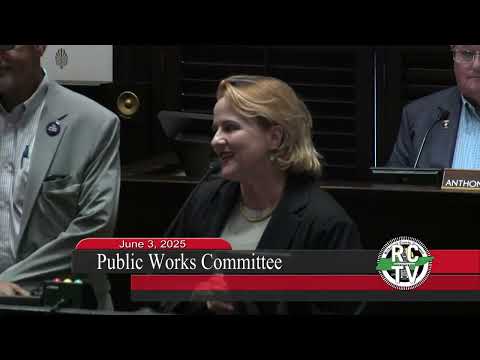
Bishop Wagner, Rutherford County solid-waste director, updated the Public Works and Planning Committee on May operations, imposed a temporary limit on mattress drop‑offs at convenience centers and said the department supports the committee’s decision to request a letter of support for SB 269.
The most newsworthy operations detail: county convenience centers will accept no more than one mattress and one box spring per person per day. Wagner said staff have been receiving unusually large volumes of mattresses — in some cases multiple mattress loads arriving at once — and the limit is intended to ensure equitable residential disposal and manageable processing at the convenience centers.
Program and performance figures Wagner reported for May: - Total waste managed by Rutherford County Solid Waste: 4,019.35 tons (all sources). - Tons from county convenience centers: 2,703.94. - School-generated waste reported: 807.8 tons. - Recycled/diverted tonnage: 507.61 tons. - Residential diversion rate for May: 12.63%. - Landfill‐scale revenue and other small-line items were reported (e.g., brush and tire receipts) in the monthly operations summary.
Wagner said the county’s MRF has capacity and that expanded end markets and infrastructure funded through producer responsibility would likely help the county reduce hauling and tipping costs. He described organics (food and yard waste) as a third or more of the waste stream and said additional infrastructure and end markets for compost and topsoil would benefit local operations and developers.
Transfer station ribbon cutting: Wagner confirmed the county’s new transfer station will open July 1 and invited commissioners to the public ceremony. He also reported an on‑the‑job medical incident involving an employee who was transported to hospital and asked for the committee’s thoughts and prayers; he said the employee was conscious when he spoke with them.
Committee action: The committee took a motion and second to approve the solid-waste report as presented; the report passed on a voice vote.
Ending: The department’s operational changes (mattress drop‑off limit) and the July 1 opening of the transfer station are immediate, local operational items. Wagner expressed support for the committee’s motion to send a letter backing SB 269, saying producer funds could help build end markets and infrastructure the county needs.