Get Full Government Meeting Transcripts, Videos, & Alerts Forever!
Get email alerts on the Extended Producer Responsibility topic
No spam. Unsubscribe anytime.
Rutherford committee hears pitch for Tennessee Waste to Jobs Act, votes to send county letter of support
Summary
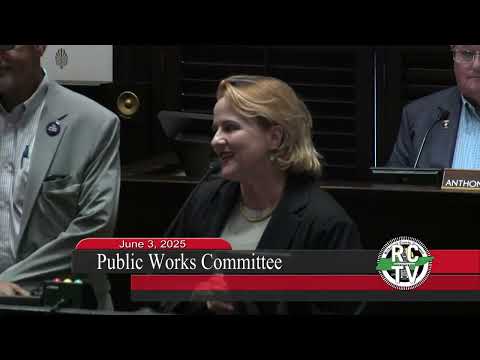
Sen. Bridal Campbell presented the Tennessee Waste to Jobs Act (SB 269) to the Rutherford County Public Works and Planning Committee and, after questions about local implementation, the committee voted to request a county attorney–drafted letter of support to be forwarded to the full commission and the county’s state legislators.
Sen. Bridal Campbell presented the Tennessee Waste to Jobs Act (Senate Bill 269) to the Rutherford County Public Works and Planning Committee on June 3, urging local officials to support a producer-funded recycling infrastructure program for Tennessee.
The proposal, presented with industry partners and a short video, would create a producer responsibility organization (PRO) to collect fees from manufacturers and use those funds for recycling collection, processing and education. Campbell and presenters said the proposal is permissive for smaller counties and would direct producer dollars to a statewide needs assessment and then to infrastructure investments.
Why it matters: supporters told the committee the program would boost local recycling markets, reduce the amount of material sent to landfills and generate funds for infrastructure without using local tax dollars. Committee members repeatedly asked how Rutherford County’s collection and processing would tie into the PRO’s plan and whether local government would be required to participate.
What presenters said: Senator Bridal Campbell framed the bill as a statewide mechanism to fund recycling infrastructure and education and described industry partners that say they can use more recycled glass, aluminum and plastics. Gary Cohen of Senator Campbell’s office, a longtime packaging-industry professional who said he volunteers as an executive director for the effort, described how producer responsibility programs have operated in other jurisdictions and the effects of the 2019 Chinese import restrictions on U.S. recycling markets. “I’m not a politician. I’m, nobody from government. I’m not a lobbyist,” Cohen said while explaining his industry background and support for extended producer responsibility (EPR).
Key details raised in the meeting: - The legislation is identified in the presentation as Senate Bill 269 (SB 269) and was described as rolled over from the prior session and to be reintroduced. - Supporters estimated the program could bring roughly $300,000,000 a year from producers to pay for recycling infrastructure; they told the committee Tennessee’s infrastructure needs could be in the $300 million–$350 million range. Those estimates were presented by speakers and attributed to modeling from other states and producer proposals. - The bill was described as permissive for smaller jurisdictions: counties with population under 200,000 would be allowed to opt in rather than be required to participate; major cities would be expected to take part initially. - The PRO would first complete a needs assessment (MRFs, transfer stations, equipment gaps such as optical sorters) and then fund investments. Optical sorters were cited as an example of expensive equipment (presenters said roughly $1 million apiece in the presentation). - Supporters named private-sector and industry stakeholders described in the presentation, including recycling processors and end users in Tennessee’s aluminum, glass, tile and plastics industries; they said several major consumer goods companies are backing EPR nationally. - Opposition noted in the presentation and during Q&A centers on beverage bottlers and business groups (the Tennessee Chamber was cited) that historically have resisted similar measures; presenters said part of their outreach is to build additional corporate and municipal buy‑in.
Committee action: After the presentation and a period of questions about local implementation and markets, Commissioner [name not specified in transcript] moved to have county staff prepare a letter of support for SB 269 and asked that the county attorney draft the letter before it is forwarded to the full county commission and state delegation. The committee chair called for the vote; members voted in favor and the motion carried. The committee recorded that the county attorney would prepare language for the letter and that the letter would be transmitted to the county commission and the delegation.
Local context from county staff: Bishop Wagner, Rutherford County solid-waste director, said the program could help the county by funding end markets and infrastructure and by supporting diversion of organics; Wagner said local facilities already accept glass and that increased end markets would reduce hauling and tipping costs. Wagner also told the committee that Rutherford’s existing materials‑recovery facility (MRF) has capacity to accept more material.
Outstanding questions and limits noted in the meeting: Presenters and commissioners agreed several matters would be resolved in the PRO’s plan rather than in the bill text — for example, whether procurement and vendor selection would be statewide or organized at county level, how RFPs would be issued, and how the PRO would work with municipal and private collection systems. Supporters described that as deliberate: the bill creates the PRO and oversight; the PRO and TDEC would develop operational detail through the needs assessment and plan.
What comes next: Committee members directed staff to have the county attorney draft the letter of support for review and transmission to the full commission and state legislators. Senator Bridal Campbell said supporters would continue to build local grassroots and municipal resolutions to demonstrate broad support as the bill is reintroduced.
Ending: The committee’s action means the Public Works and Planning Committee will forward a county-prepared letter of support for SB 269. Further local participation, funding allocations and operational details were left to the PRO planning process and to subsequent county and municipal decisions.