Get Full Government Meeting Transcripts, Videos, & Alerts Forever!
Get email alerts on the Ems Ambulance topic
No spam. Unsubscribe anytime.
Auburn approves ambulance agreements with Owasco while residents raise billing and 'lift assist' concerns
Summary
The council authorized intermunicipal agreements to station Auburn City Ambulance in Owasco and to use Owasco Fire District space; residents at the meeting raised concerns about ambulance transport charges and a proposed lift‑assist fee for care facilities.
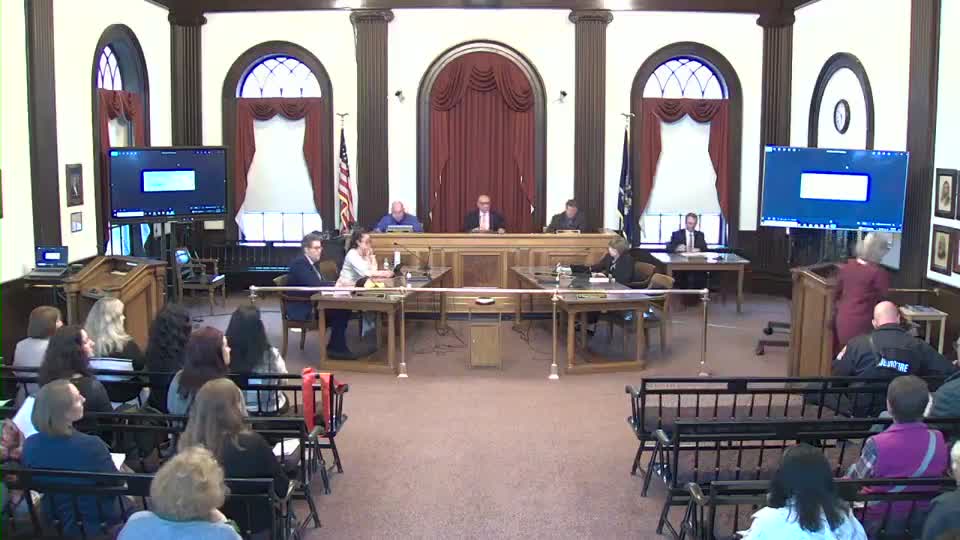
The Auburn City Council on May 22 approved intermunicipal agreements to provide Auburn City Ambulance services to the Town of Owasco and to station one ambulance in space provided by the Owasco Fire District. Sponsors for the agreements were Councilor Clerico, seconded by Councilor Kent.
The agreements implement a cooperative model city officials described as “regionalization” of essential services. City Manager Jeff Deigert described the arrangement as “two communities working together to provide an essential service,” and said Supervisor Wagner and Fire Chief Jeremy Vivon had expressed satisfaction with the partnership during negotiations.
Multiple residents used the public‑to‑be‑heard period to raise questions about ambulance billing and a proposed fee tied to so‑called lift assists. Pamela Costick, a resident of 120 Chapman Avenue, said she understood basic life‑support ambulance transport was billed to insurance at about $1,200 and advanced life‑support transport at about $1,600, and asked who is billed if insurance does not pay. “If a patient's insurance doesn't pay for that, who gets charged for that? … I can't afford that,” Pamela Costick said. The clerk told the speaker the council could not engage in a back‑and‑forth during public comment but would take the question and follow up.
Separately, several residents at subsidized senior housing asked how a proposed $250 ‘lift‑assist’ fee would be applied. Assistant City Manager/acting staff clarified the fee is intended to apply to assisted‑living or medical care facilities that repeatedly call emergency responders, not to individual residences or senior housing developments used as apartments. “That fee is being applied to, say, a nursing home where they're continuously calling our emergency,” the official said during council discussion. Council members framed the fee as an attempt to reduce repeated calls that shift private care costs to taxpayers.
Why this matters: The agreements extend Auburn’s ambulance coverage into neighboring Owasco and commit the city to operating costs and coordination responsibilities; at the same time, residents pressed the council on out‑of‑pocket ambulance charges and the equity of additional fees for care facilities. City staff said the questions will be taken back for follow‑up with details about billing and fee implementation.