Get Full Government Meeting Transcripts, Videos, & Alerts Forever!
Get email alerts on the Homelessness Policy topic
No spam. Unsubscribe anytime.
Spokane council advances homelessness ordinance package amid sharp public debate
Summary
The Spokane City Council moved a package of first-reading ordinances addressing homelessness, camping, pedestrian interference and emergency shelter policy after hours of public testimony that highlighted sharp disagreement over enforcement, shelter availability and public safety.
The Spokane City Council on first reading advanced a package of ordinances intended to update city rules on camping, pedestrian interference and emergency shelter activation while adopting related procedural code changes.
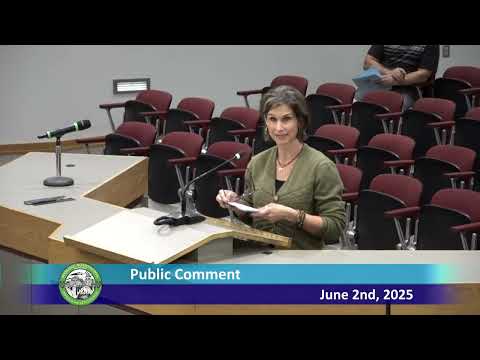
Supporters and opponents told the council the measures could either improve public safety and services or criminalize people who are unhoused. Raelynn Barton, director of policy and membership at the Downtown Spokane Partnership, told the council the legislation “does not reflect the input shared by downtown stakeholders who confront daily challenges in being able to freely use sidewalks outside of their businesses or residents.”
The package read into the record includes ordinance C36679 (obstruction/pedestrian interference and sit-and-lie language), C36691 (the “Home Starts Here” initiative, amending Chapter 18.05), C36692 (rules for inclement weather centers and emergency/transitional housing), C36694 (aggressive solicitation), and related code edits to implement the proposals citywide. Council members and staff emphasized the items were first readings only; some provisions were deferred or held for further action.
Why it matters: the ordinances would change how and where city officials could enforce rules against camping and obstructing public rights-of-way, how inclement-weather and emergency shelter sites operate, and how aggressive solicitation is defined and enforced. Speakers repeatedly invoked Proposition 1, the prior voter-approved measure about public camping and sit-and-lie rules, and a recent state supreme court decision that affected enforcement options.
Public testimony was extensive and sharply divided. Business and property interests — represented by speakers such as Brad Barnett, president of the Spokane Business Association, and Raylynn Barton of the Downtown Spokane Partnership — urged stronger enforcement and quicker action, warning of downtown decline and lost tax revenue. Barnett said the proposed language “focuses on outreach and not on enforcement,” and asked the council to consider a 90‑day emergency declaration to marshal more resources.
Community and service‑oriented commenters urged caution about criminalizing people who are unhoused and pressed for more shelter beds and low‑barrier, culturally appropriate services. Angel Camio Sam, executive director and cofounder of YoYo Spoke Me, said the proposed changes “would empower law enforcement to criminalize people for surviving in public spaces regardless of whether shelter is actually available, safe, or accessible.” Sam added that “Spokane has more than 2,000 unhouse[d] residents, but fewer than 1,000 shelter beds, and many are not low barrier.”
Other commenters recommended centering outreach-first practices and investing in housing, mental‑health and substance‑use treatment. Sasha Mawhinney, a social work graduate student who testified as part of a policy research group, said the ordinances “reflect the commitment to addressing homelessness' root causes from housing affordability, economic security, to health and behavioral health support.”
Council members repeatedly sought clarity about how existing sit‑and‑lie rules would interact with the new pedestrian‑interference language. Councilmember Dylan (as identified in the public record) said the package is closer to a pedestrian‑interference framework than a straight sit‑and‑lie ordinance and noted that camping in parks remained banned both before and after Proposition 1 under certain conditions.
The council also discussed an amendment and whether the new rules would require confirmation that shelter beds are available before enforcement. Councilmember Zappone clarified during public testimony that the current sit‑and‑lie code requires shelter bed availability before some enforcement, and the new proposed language would not require that same citywide shelter‑availability verification at all times.
Action and next steps: the measures were presented as first readings; the council did not adopt final ordinances at the meeting. One ordinance in the package (C36693) was deferred indefinitely, other items remain in first‑reading status and will return for further council action and possible amendment. Councilmembers and staff said they would provide additional clarifying information on the record about specific language, shelter‑availability rules and implementation plans.
The debate included repeated references to local data and prior counts. A council briefing cited initial engagement numbers for a downtown outreach program: 90 people engaged in the first month with 13 (about 7 percent) choosing to engage with services. The council also reviewed point‑in‑time count responses — of 73 respondents asked about last known residence, 68 reported Washington as the last known residence, and other respondents reported other states.
Community reaction is likely to continue; the council asked staff to supply clarifications and signaled that language on sit‑and‑lie versus pedestrian interference would be available for review before final action.