Get Full Government Meeting Transcripts, Videos, & Alerts Forever!
Get email alerts on the Tobacco Settlement And Prevention topic
No spam. Unsubscribe anytime.
House appropriations subcommittee reviews tobacco settlement, stakeholders urge more prevention funding
Summary
House Appropriations Subcommittee on Public Health heard an overview of Michigan's tobacco settlement and tax revenue and testimony from health advocates who said the state spends a tiny fraction of tobacco revenue on prevention and cessation services, with witnesses urging larger, targeted investments to curb youth vaping and smoking.
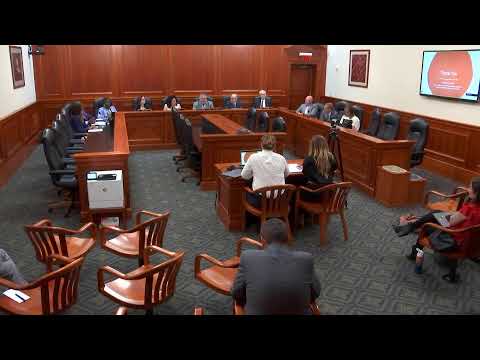
LANSING ' The House Appropriations Subcommittee on Public Health on May 20, 2025 heard an overview of Michigan's tobacco settlement and tobacco tax revenues and testimony urging greater investment in prevention and cessation programs. Sydney Brown, fiscal analyst with the House Fiscal Agency, told the panel the state's estimated net Master Settlement Agreement receipts for fiscal year 2025 are $245,400,000 and that $58,800,000 is estimated to flow into the Merit Award Trust Fund this year.
The presentations and questions centered on how settlement and tax dollars are allocated, and whether those funds are being used to reduce tobacco use and youth vaping. "The estimated net master agreement revenue for fiscal year 25 is $245,400,000," Brown said during her overview. Stakeholder witnesses, including physician Brittney Taylor and Molly Maidenblick of the American Cancer Society Cancer Action Network, said prevention and cessation programs are underfunded in Michigan and urged reallocation or greater use of existing tobacco revenues.
Why it matters: Witnesses said tobacco use remains a leading preventable cause of death in Michigan and that most adult tobacco use begins in adolescence. They argued that much of the state's tobacco-related revenue is directed to other uses and that prevention funding has lagged behind federal recommendations and comparable states.
Brown outlined the major flows of tobacco settlement and tax money the committee would likely encounter in the public health budget. Among the allocations she identified: the 21st Century Jobs Fund (which Brown identified as receiving about $75,000,000 from settlement receipts), a stabilization fund created to assist with the distribution tied to the City of Detroit retirement obligations, and the Community District Education Fund (funds that backfilled redirected local property tax millages when the Detroit public schools were reorganized). She said remaining settlement dollars after those earmarks flow into the Merit Award Trust Fund, which supports public health budget lines the committee oversees.
On the tobacco tax, Brown said the Michigan Constitution and state law designate earmarks to several funds, including the Healthy Michigan Fund. She said an estimated portion of tobacco-tax proceeds credited to the Healthy Michigan Fund is used by the Michigan Department of Health and Human Services (MDHHS) for smoking prevention programs, and that "50 percent of the proceeds are used for smoking prevention programs by DHHS to expand the free smokers quit kit program to include nicotine patch or nicotine gum." Brown did not have a single-year total estimate for overall tobacco tax revenue available during her remarks but offered to provide it on follow-up.
Physician and public-health advocate Dr. Brittney Taylor testified about the health and economic burden of tobacco use in Michigan and the gap in prevention funding. Taylor identified herself as "an internist and pediatrician" and assistant faculty at the Pediatric Public Health Initiative in Flint. She said smoking remains a primary driver of chronic disease and premature death in the state, cited higher-than-average prevalence in "Tobacco Nation" states, and described trends among youth: she said approximately 16.5 percent of Michigan high-school students use any tobacco product and about 14 percent use e-cigarettes.
Taylor criticized the level of state investment in prevention and cessation. She said Michigan collects substantial tobacco-related revenue (she cited roughly $650 million in tobacco tax revenue in a recent year) but invests only a small fraction in prevention and cessation programs. "We have received $7,000,000,000 in the tobacco master settlement dollars. And to answer 1 of your questions, 0% has gone to the Michigan Tobacco Control Program," Taylor said, adding that the state currently funds very few youth cessation programs and that cessation services and trained tobacco-treatment specialists are scarce outside southeastern Michigan. She recommended expanding QuitLink and cessation training, supporting school-based prevention curricula, and investing in retail licensing and enforcement.
Molly Maidenblick, government relations director for the American Cancer Society Cancer Action Network, said national and state comparisons place Michigan among the states with the highest smoking rates and lowest prevention funding. Maidenblick thanked the legislature for recent steps that moved Michigan from the lowest rank toward better funding but said the state remains below CDC-recommended levels for tobacco prevention and cessation spending.
Committee members pressed staff and witnesses on specific allocations. Representative Manek said he was "shocked" that settlement dollars had been used for economic development (which witnesses described as the 21st Century Jobs Fund). Other members asked staff to provide more detail on the history of specific line items that currently use Healthy Michigan Fund dollars and on county-level prevalence data; Brown said she would provide the requested breakdowns after the hearing.
Formal action taken during the session consisted of approving minutes from a prior meeting. Representative O'Neil moved to approve the minutes of the May 2025 meeting; "there being no objections, the minutes are approved," the clerk recorded.
The committee requested follow-up from staff on several items, including: (1) a detailed breakdown of which public-health budget line items have historically used Healthy Michigan Fund dollars and in which years; (2) a single-year estimate of total tobacco-tax revenue (Brown said she would provide that number); and (3) county-level usage and survey data from MDHHS.
The subcommittee left the record open for follow-up and adjourned after stakeholder testimony and member questions.