Get Full Government Meeting Transcripts, Videos, & Alerts Forever!
Get email alerts on the City Budget topic
No spam. Unsubscribe anytime.
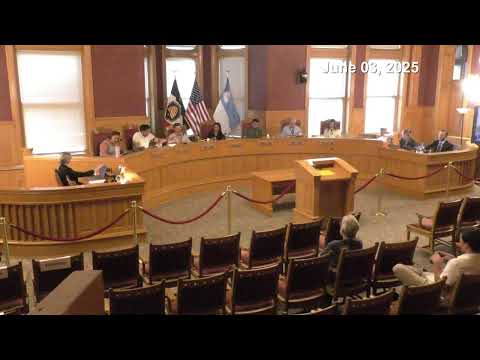
Salt Lake City council hearing draws residents urging funding for CIP projects including traffic calming, hawk signal and bike parking
Summary
Salt Lake City Council members held a public hearing June 3 on the proposed fiscal year 2025–26 city budget, during which residents urged funding for multiple Capital Improvement Program (CIP) projects, including additional bike parking at the Milk Block, traffic-calming measures in the Glendale neighborhood, repairs to tree islands in East Central, a hawk pedestrian signal at Richmond Street and Zenith Avenue, and street repaving such as Texas Street.
Salt Lake City Council members held a public hearing June 3 on the proposed fiscal year 2025–26 city budget, during which residents urged funding for multiple Capital Improvement Program (CIP) projects, including additional bike parking at the Milk Block, traffic-calming measures in the Glendale neighborhood, repairs to tree islands in East Central, a hawk pedestrian signal at Richmond Street and Zenith Avenue, and street repaving such as Texas Street.
The hearing covered ordinances G1 through G15, which together implement the mayor’s budget recommendation. Jennifer Bruno, council executive director, told the council those ordinances are considered collectively and that departments were reviewed in work sessions in May and June. After public comment the council voted to close the hearing and refer the ordinances to a future date for action.
Several residents used the hearing to press for specific CIP work. Evan Subden, who submitted CIP proposal No. 481244, said, “There remains a high demand for bike parking at the Milk Block,” and asked the council to expedite installation of additional hoop-style racks and to set aside minimal contingency funds to cover potential cost overruns. Esther Hunter, speaking for East Central, described a 10-year plan to repair Twelfth East tree islands established in 1913 and said the neighborhood has “the highest density in the city per square mile” and limited nearby green space.
Glendale residents urged traffic-calming measures on residential streets. Matthew Morris, a Glendale resident and sponsor of the Glendale Traffic Calming proposal, said “speeding cars are a grave concern” on Eighth West and urged funding for vertical speed bumps and intersection safety work; Morris told the council the proposal was ranked second by the city’s transportation advisory board and third by the bicycle advisory board among constituent proposals. Kelby Gopel, also of Glendale, said slowing traffic would “be an investment in the safety and well-being of this area,” noting the street’s connections to Ninth South, Thirteenth South, the 9 Line and Jordan Park.
Parents and neighbors described hazardous pedestrian conditions at Richmond and Zenith. Avery Edenfield, whose family uses the crossing frequently, said the transportation division “confirmed a hawk signal is the next tier of pedestrian safety,” and described repeated near-miss incidents near a daycare. Tina Hernandez said she was struck by the risk firsthand: after pressing the crosswalk button and beginning to cross with her 1-year-old daughter, “the second car back did not notice the car in front slowing down… Both cars spun out of the intersection heading for me,” and she said, “I no longer feel safe to use this crosswalk by foot.”
Other commenters pressed for street repairs. John Westie urged funding for the Texas Street CIP, saying “the road conditions are a certain reflection of the quality of the city,” and cited a street quality index of 18 for his block.
Council members thanked residents for detailed proposals and clarified the process. Council Member Young said the constituent CIP program “is one of my favorite programs in the entire city budget because it’s a place where we create opportunities for our neighbors.” Council Member Mano explained that adopting the budget in the coming week would set the total amount available for the CIP but would not select individual projects: “When we adopt our budget in the next week or so, we’re adopting the amount that’s going into the CIP project. There will be a separate process later in the summer where we approve which projects.” Council staff added that the council must adopt the CIP budget by August under state law and that a more specific public hearing on CIP project selection is typically held in July.
After public comment Council Member Dugan moved and Council Member Wharton seconded a motion to close the hearing and refer ordinances G1–G15 for future action; the motion passed unanimously.
The council will return to final budget adoption and later to the CIP project selection process; residents who submitted constituent proposals were urged to continue engaging with council staff and advisory boards.