Get Full Government Meeting Transcripts, Videos, & Alerts Forever!
Get email alerts on the Public Safety Fire topic
No spam. Unsubscribe anytime.
Salt Lake City fire budget requests focus on contract changes, social‑work intern and wildfire preparedness
Summary
The fire department presented a largely flat FY2026 budget that increases only for a union uniform allowance and continues social‑work partnerships; chiefs described two CHAT teams in operation, wildfire planning activity including a wildland coordinator, and no immediate plan to expand CHAT teams.
Salt Lake City Fire Department leaders on Tuesday presented a mostly flat fiscal‑year 2026 budget that keeps staffing levels steady but includes several targeted items: an increase to uniform allowances in the department union’s memorandum of understanding, funding for a social‑work intern, and ongoing wildfire preparedness work.
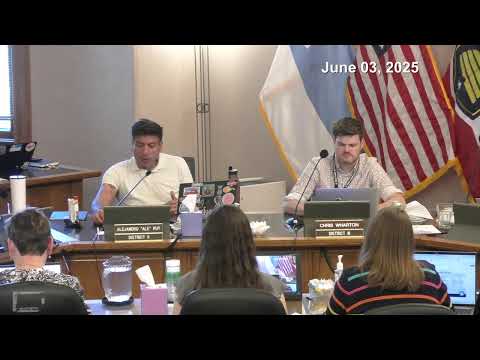
Michael Sanders of the council staff opened the briefing by summarizing the department’s budget, noting that 94% of the fire budget is personnel and that the department counts 609 full‑time equivalent positions. Sanders corrected one figure in the staff report and said the overall year‑over‑year budget increase is about $231,000.
Fire Department leadership said the formal budget components include a contractual increase to uniform allowances from $600 to $800 per covered firefighter beginning July 1; the city’s request for uniforms totals roughly $72,400. The department also plans to place a social‑work intern on field rotations in partnership with the University of Utah; staff said the intern will be funded internally and will not increase the personnel budget.
Chiefs and staff described the department’s community‑based response work — the CHAT (Community Health Assistance Team) and MRT teams — noting two CHAT teams are currently operating with six social workers and one supervisor. The teams are stationed on the West Side (Station 6) and East Side (Station 5) and average about six to seven calls per day, the chief said; department leaders said they are aiming for roughly nine to 10 calls per day as an ideal utilization level.
The department has no immediate plan to add another CHAT team, leaders said, explaining that adding a full additional team would require two social workers, two medical‑response paramedics and two firefighters plus an additional vehicle, equipment and radios. “Right now the volume isn’t there to support an additional team,” the chief said, adding that data collection over the coming months will guide any future staffing proposals.
On wildfire preparedness, the department said it has obtained a grant to update the city’s Consolidated Wildland‑Urban Interface/Wildfire Protection Plan (CWPP) and plans to hire a contractor to prepare the revision. The fire chief said the department has created a new wildland coordinator position — a firefighter dedicated to assessing wildfire preparedness, training, mutual aid and certification — and that crews are expanding pre‑planning and outreach in high‑risk foothill neighborhoods such as City Creek and Kerrigan Canyon. The chief added that the city has not requested large new wildfire‑specific budget items for FY2026 but that future budget requests for additional firefighters or apparatus remain possible.
Council members asked about wildfire risk, utility infrastructure, and the department’s ability to reach all parts of the city within National Fire Protection Association standards. Chiefs said they meet NFPA response goals and that community education and property hardening — creating defensible space and trimming brush near homes — are critical parts of mitigation.
No vote or formal action was taken at the work session; the presentation was an informational briefing ahead of the formal budget process.