Get Full Government Meeting Transcripts, Videos, & Alerts Forever!
Get email alerts on the Land Use Quarry topic
No spam. Unsubscribe anytime.
Commission debates New Hope-area quarry; motion to deny faces inconsistent roll-call
Summary
Loudon County commissioners heard public opposition to a proposed quarry near the New Hope community and voted on a motion to deny the rezoning request; the meeting record contains conflicting announcements about the outcome.
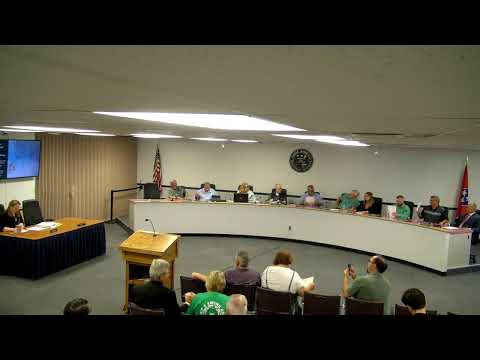
Loudon County commissioners on June 2 debated a rezoning request for a proposed quarry near the New Hope community and heard multiple residents oppose the project before a motion to deny the rezoning was put to a vote.
The matter drew public comment from residents who live near the proposed site. “The roads in the community… they’re very narrow,” said Doug Lynn, who said the quarry would sit beside his front yard and raised concerns about large truck traffic, blasting, noise and dust. “This past summer, there was a blast that shook our house,” he said. Crystal Todd, another nearby resident, urged county officials to shut down any quarry operations she believes are occurring without permits: “If they’re operating a quarry illegally right now, we need to try to get that shut down.”
Commission staff noted the planning commission did not recommend approval. Commissioner Whitfield moved to deny the rezoning, saying, “We sure don’t need a quarry down in Philadelphia, Tennessee,” and the motion was seconded by Commissioner Randolph. Commissioners debated the public-safety and road impacts during the discussion.
The roll-call and the clerk’s announcements were inconsistent in the transcript: during voting the board was recorded saying “Yes” multiple times after the chair explained that a “yes” vote would deny the request, and the clerk’s initial announcement was transcribed as “Denied.” Moments later the record also contains the phrase “Motion does not carry.” The transcript contains both lines; the meeting record as read aloud in the room therefore presents conflicting outcomes.
Because the official transcript contains inconsistent statements about the final result, the county’s written minutes or the certified vote tally should be consulted to determine the board’s formal action and any next steps for the applicant or for enforcement staff.
Speakers at the public hearing urged denial, citing traffic, vibration from blasts, dust and property-value impacts; county staff reiterated that any future approvals would be specific to the development proposal and that zoning would revert if a different project sought approval.