Get Full Government Meeting Transcripts, Videos, & Alerts Forever!
Get email alerts on the Historic Preservation Demolition topic
No spam. Unsubscribe anytime.
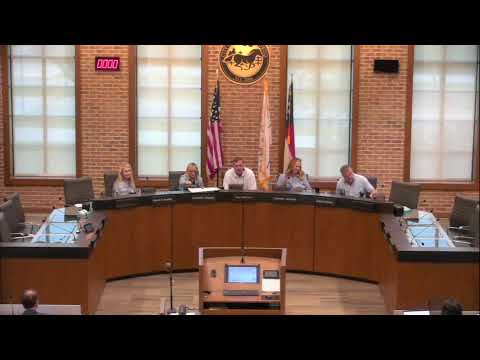
Milton design review board approves demolition of historic cottage at Saint Aidan’s in 3–2 vote
Summary
The City of Milton Design Review Board voted 3–2 to recommend demolition of a late-19th‑century cottage on the Saint Aidan’s Episcopal Church property after staff and the applicant said relocation and restoration options failed to materialize.
The City of Milton Design Review Board voted 3–2 to approve demolition of a cottage known locally as the Wallace house on the Saint Aidan’s Episcopal Church property at 13560 Cogburn Road.
City planner Jackie Jennings told the board the house was “constructed between circa 1890 and 1899,” that it appears in the Georgia Historic Resources GIS and the City of Milton historic survey list, and that “several exterior and interior alterations over the years have resulted in some loss of historic architectural character.”
Father Reggie Simmons, director at Saint Aidan’s, called the cottage “uninhabitable, unusable” and said the church could not afford restoration. “It’s not in our budget to restore it,” he told the board, adding that the small house “obscures the parish” and has become “an eyesore.”
Staff described attempts to preserve the structure—outreach to the Milton Historical Society, outreach to individuals and organizations willing to relocate the cottage, and a proposal to donate it for use as a clubhouse—none of which produced a firm commitment. Jennings said relocation efforts included interest from a parishioner, Curtis Mills, who previously offered to relocate the structure to private land, but he “no longer wants to do that” after regulatory and logistical hurdles.
Board members debated the effect of prior renovations on the house’s historic integrity and whether more time should be allowed for relocation efforts. One member said the house had been so altered that it “doesn’t look historic to me.” Another member urged caution but ultimately concluded staff and the applicant had done due diligence. After discussion, Chair Ken Warlick moved to approve the demolition; the motion passed on a recorded outcome of 3 in favor and 2 opposed.
The board’s action authorized staff to proceed with demolition permitting subject to standard conditions listed by staff: completion of a demolition permit application, restoration of disturbed grass areas after demolition, and avoidance of tree removal without a permit. The applicant was told the board would welcome evidence of a last‑minute preservation effort, but the approval allows the church to pursue demolition if no such offer appears.
The Milton Historical Society was notified during staff outreach but did not appear or submit opposition at the meeting. The board’s vote was advisory to the city’s permitting process; demolition requires completion of city demolition permits and compliance with building and fire codes.