Get Full Government Meeting Transcripts, Videos, & Alerts Forever!
Get email alerts on the Large Scale Development topic
No spam. Unsubscribe anytime.
Commissioners review Westbridge Meadows ("Andrew Farms") master plan; staff proposes phased triggers for roads, bridges and utilities
Summary
County planning staff and the applicant briefed the Weber County Commission on the Westbridge Meadows master plan, a multi‑decade project described in the presentation as roughly 13,200 dwelling units over 30–50 years.
County planning staff and the applicant briefed the Weber County Commission on the Westbridge Meadows rezone and master-plan proposal — a multi-decade development the presentation described as producing roughly 13,200 dwelling units over 30–50 years on the project area described in the meeting.
Staff described the proposal as a phased project with an initial two-phase buildout of roughly 2,500 dwelling units in the first decade and later phases tied to traffic triggers, emergency egress and floodplain mitigation. "If we try and slow growth ... we create a scarcity," a planning representative said; the presentation emphasized balancing market demand with infrastructure provision. Staff recommended tying entitlements to measurable traffic and infrastructure triggers so permits cease when thresholds are met until required improvements are made.
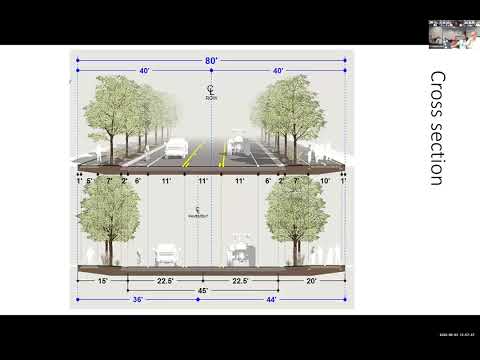
The presentation covered transportation and infrastructure at length. Staff said developers must provide on-site sewer and water systems and anticipated significant drainage and floodplain mitigation. The plan reserves land for two potential rail stations and a 60-foot easement for potential future track alignment; staff said they also asked the developer to reserve space for a future highway corridor and to plan for crossings of the river and Union Pacific railroad. "As soon as Twelfth Street ... starts to approach the bottom side of level of service C, either 2550 West needs to be built with a bridge going into the project or 1800 needs to be built with a bridge going into the project," a staff member said as an example of a traffic-triggered construction requirement.
Commissioners and staff discussed the railroad crossing at 7500 West and the railroad's limitations. Staff said Union Pacific agreed to thresholds based on a traffic study; staff also said the railroad signaled that improvements to that crossing likely would not be approved, making alternate river bridges and highway-grade connections essential. Commissioner comments ranged from support for locating growth on less productive agricultural ground to concern about protecting shoreline and upland habitat; one commissioner said he would like purchase or reservation of a 300-foot buffer at certain shoreline areas and staff said natural-resources staff will be engaged in upcoming meetings.
Staff described a flexible development-agreement approach that vests layout and utility configurations sufficient for financing but does not freeze all future county ordinances for projects spanning decades. The agreement as presented would include: measurable phase triggers tied to traffic level-of-service, required bridges for emergency access across the river, developer-funded proportionate shares of off-site road and intersection improvements, reserved space for transit and future highways, and periodic review of phases and metrics.
No final vote was taken. Commissioners generally expressed support for the approach but asked staff to continue refining the development agreement, coordinate with natural-resources staff on open-space buffers, and ensure funding mechanisms (impact fees, developer contributions, interagency coordination) are clear. Staff said initial phases would likely require significant water and sewer solutions before broad buildout could occur; the developer and staff will return with more details and refined metrics for phase triggers and funding responsibilities.
Ending: Staff and the applicant will refine the draft development agreement, continue coordination with state and county agencies on floodplain and natural-resources issues, and return to the commission with more detailed phasing metrics and traffic modeling.