Get Full Government Meeting Transcripts, Videos, & Alerts Forever!
Get email alerts on the Solid Waste topic
No spam. Unsubscribe anytime.
Wakulla County, Waste Pro discuss recycling participation and proposed franchise fee increase
Summary
Waste Pro and county staff said recycling participation is about 20%, recycling processing now costs roughly $110 per ton, and staff recommended a $10 annual increase to the solid‑waste franchise fee (from $2.04 to $2.14) and paying off a landfill loan to restore the fund’s reserves.
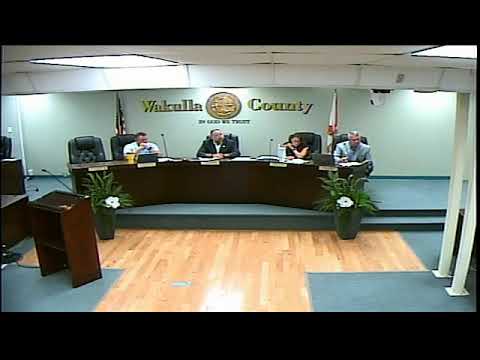
County leaders and Waste Pro representatives discussed low recycling participation, higher processing costs and options for solid‑waste rates at the Wakulla County budget workshop.
“According to the data where they pick up…about 20% of our residents recycle,” county staff said while introducing Waste Pro to explain collection and commodity costs. Waste Pro told commissioners that recycling volumes have fallen (Waste Pro reported recycling from about 725 tons in 2019 to a projected 460 tons this year) and that processing markets changed after China reduced commodity imports; Waste Pro said typical processor fees are now about $110 per ton and it is rare to receive significant revenue back from commodities.
Waste Pro representatives said increased labor, fuel and equipment costs have pushed collection expenses higher. The company said Wakulla County’s resident rate (about $17 per month under the current contract) compares lower than nearby jurisdictions (examples cited in the presentation included Leon County at $24.33 monthly). Waste Pro said the firm runs nine trucks in the county (six garbage, one recycling and one commercial truck, plus others as needed).
County staff recommended several steps for the solid‑waste fund: pay off an outstanding landfill loan ($310,000 payoff cited in the presentation), restore the county’s franchise fee from roughly a 5% margin toward an 8% margin, and propose a $10 annual increase in the per‑customer franchise contribution (from $2.04 to $2.14) to begin rebuilding reserves for future improvements such as additional convenience stations, hazardous‑waste handling and scale upgrades. Staff said the franchise fee is the delta between the amount charged to residents and the amount Waste Pro charges the county for collection and disposal; staff said the franchise fee had been reduced to about 5% and needed to return to around 8% to generate roughly $100,000 per year for capital needs.
On recycling, Waste Pro described the national market shift and recommended the county consider whether to continue curbside recycling as a subsidized service; the company and staff discussed the possibility of a lower subscription rate for recycling or consolidating recycling to drop‑off containers for the roughly 20% of households that use the service. Waste Pro said the county’s current recycling volumes make curbside recycling expensive on a per‑ton basis because of low density, processing fees and added truck and labor costs.
Staff recommended holding solid‑waste rates flat this budget year while negotiating with Waste Pro on route and service adjustments; staff also proposed paying off the landfill loan now to avoid future interest and restore fund reserves. No formal contract change or vote was recorded at the workshop; staff said they will continue negotiations and bring firm proposals back to the board.
Quotes in this article are taken from the workshop transcript and attributed to the speakers who made them.