Get Full Government Meeting Transcripts, Videos, & Alerts Forever!
Get email alerts on the County Budget topic
No spam. Unsubscribe anytime.
Wakulla County staff outline budget priorities, propose health‑care contribution changes and multiple rate studies
Summary
At a budget development workshop, county staff said Wakulla County is in a generally healthy cash position but faces several fund shortfalls and legislative uncertainties; staff recommended new employee health‑care contribution percentages, a 3% cost‑of‑living adjustment, and several rate and allocation studies to guide next year’s budget.
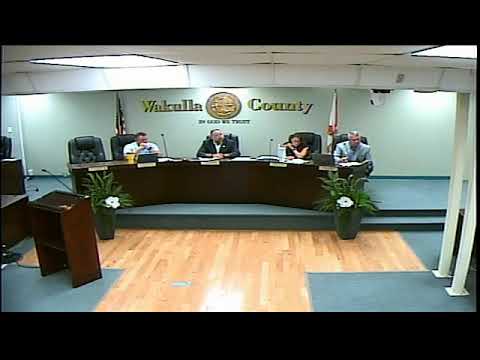
At a Wakulla County budget development workshop, county finance staff presented a preliminary view of the fiscal year 2025–26 budget and recommended changing employee health‑care contributions, a 3% cost‑of‑living adjustment and several studies to set future rates and interfund charges.
The workshop, the first of three in the fiscal year 2025–26 budget development process, focused on overall budget approach and priorities. “This is the first of 3 scheduled workshops in the fiscal year 25, 26 budget development process,” Kelly Graves said. Graves asked commissioners to raise questions as staff walked through fund balances, revenue projections and pending uncertainties affecting the county budget.
County staff said the general fund began the year with about $6,200,000 in fund balance against a target of $3,800,000, leaving a reported surplus of roughly $1,380,000. Ad valorem collections through April stood at $17,137,000 and were projected to finish the year at about $17,300,000, staff said; total general revenues for the current year were reported at $32,734,000, with property taxes comprising just over 52% and state revenue sharing about 28.5%.
Staff described several special‑revenue and project funds with tighter positions: the revenue stabilization fund, which supplied prior project spending, showed large draws last year (about $18,500,000) and was described as sitting at roughly a $2,000,000 negative cash balance after recent activity; sewer access fee and certain project funds were also reported negative but expected to recover from ongoing fee collections and investment proceeds. The county’s combined 1¢ sales tax project funds began the year with about $3,800,000 and are projected to receive about $4,600,000 in new revenue, but staff said roughly $8,400,000 in planned projects will draw those balances near zero by year‑end.
Staff identified legislative uncertainty and a possible delayed state budget as major threats. “If the state does not have a budget on July 1, nobody really knows what that might mean for us,” Graves said, noting a county attorney had advised that state law provides for continuation at prior levels but that practical impacts (staffing reductions, furloughs at the state level) could complicate flow of funds.
On compensation and benefits, staff recommended reworking the county’s employee contribution structure for the CHP (county health plan). Staff reported an estimate of an 8% increase in CHP costs for the coming year and provided sample premium levels: a single plan at an estimated $11,446 per year, employee‑plus‑children $19,458, two‑adult $22,892 and family plans over $34,000. To share those increases, staff proposed setting employee contributions to fixed percentages: 5% for single plans, 10% for employee‑plus‑children, and 12% for employee‑plus‑spouse and family plans, with an eventual target of 15% for spouse/family plans in future years. To offset those contribution changes for employees, staff recommended a 3% COLA (cost‑of‑living adjustment) so net take‑home pay would not decrease after October 1.
Staff also recommended performing several external studies to inform rate and allocation decisions: a general fund allocation study to set interfund administrative charges, a fire MSBU (Municipal Service Benefit Unit) apportionment study to align fire assessments by property type, an EMS MSBU feasibility study to examine a possible dedicated EMS assessment (staff estimated a dedicated EMS funding source could potentially relieve about $2,000,000 from the general fund), and a sewer rate study (the prior sewer rate study set rates through 2026). Graves said the general fund allocation study was last done in 2019 and needs updating after organizational and wage changes.
Graves presented preliminary taxable value numbers: a preliminary estimate of $2,500,000,000 in taxable value (a roughly 9.54% increase over the prior year, about $217,000,000 of which staff said is new construction, with about $125,000,000 attributed to new construction and $92,000,000 to increases in existing property values). At the current millage of 7.9 mills, staff said that taxable value would generate an estimated $18,772,000. Staff provided a rollback rate example (7.5932) that staff said would yield about $18,000,000, and an example rollback plus a CPI adjustment (7.7678) that staff projected would yield roughly $18,458,000.
Staff noted constitutional officers’ budget requests totaled about $23,055,000, an increase of roughly $2,500,000 over the current year’s $20,500,000; Graves said none of the constitutional officers requested new positions. Separately, staff said a state FDLE law‑enforcement salary grant that offset sheriff’s office salaries this year was roughly $945,000 and that the county had not yet received confirmation the grant will continue.
Discussion at the workshop ranged from potential local revenue diversification (options such as local option sales tax, special assessments, or revised user fees) to the timing and scope of studies and rate changes. Commissioners asked staff to provide more detail on rollback rate calculations, nonprofit funding applications and the health‑plan comparison work with broker Brown & Brown.
Direction and next steps identified by staff included: bring back nonprofit application packets for commissioner review, proceed with procurement planning for a new IT contract (the county’s current IT contract expires this year), prepare proposed adjustments to certain assessment rates and user fees (fire assessment, solid waste assessment, sewer fees already scheduled by prior resolution), and present the next budget materials at the July 14 workshop.
Because the presentation contained preliminary estimates and staff recommendations rather than formal votes, no formal board actions were recorded at the workshop.