
Salish artist Aspen Decker traces first contact, treaties and language revival in Missoula gallery talk
Get AI-powered insights, summaries, and transcripts
Sign Up Free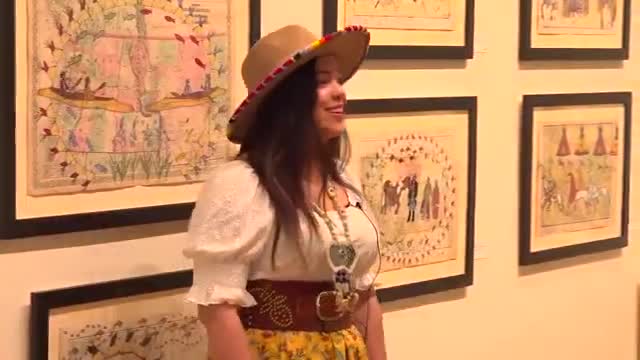
Summary
At Radius gallery in Missoula, artist and language educator Aspen Decker used ledger art to explain Salish histories from first contact through the Hellgate Treaty (1855), described cultural practices such as sign language and bitterroot harvesting, and outlined efforts to revive the Salish language.
Aspen Decker, a Salish artist and language educator, told a Missoula audience that first contact, treaty-making and language loss shaped Salish people’s modern experience and that ledger art can restore those stories.
Decker spoke at Radius contemporary art gallery as the second lecture in a three-part series on Salish history. Lisa Simon, gallery co-owner and event host, introduced Decker and said, “She’s absolutely qualified to tell us about the history of this, of the Salish people whose whose lands Missoula occupies.”
Decker used images, personal history and cultural explanation to place ledger art, first contact with fur traders and the Lewis and Clark expedition, and treaty-era removals into a Salish frame. She described ledger art as a pictographic tradition tied to regalia and family designs and said she incorporates Salish language into her pieces so viewers engage both visually and linguistically. “I draw from what are our colors, the colors that we typically use in our regalia,” Decker said.
She told the audience that early trade and contact—through Hudson’s Bay Company traders and regional trading networks—brought horses, firearms and disease before and during the Lewis and Clark expedition. Decker described Salish responses to outsiders as cautious and politically complex, noting scouts and about 80 warriors were present in the Bitterroot Valley when Lewis and Clark arrived. She said the often-romanticized narratives of explorers omit the political calculations and the unequal nature of early trade: “They weren’t really here to be allies, they were just taking,” she said.
Decker emphasized how naming and scientific labels changed local meaning. She described the bitterroot (which she identified by its Salish name, Spethom) as a staple food and cultural symbol; European journals and Linnaean naming, she said, reframed it as “bitter.” “The bitter root actually has a little red heart,” Decker said, explaining harvest protocols and the plant’s cultural importance.
On treaty history, Decker discussed the Hellgate Treaty era and how treaty lines and later federal policies split communities. She described how the Upper and Lower Kalispel people continued seasonal travel and cultural exchange even after boundary-setting, and she named the Dawes Act (late 19th century) as part of the removal-era legal landscape that followed the treaty period.
Language revitalization was a central theme. Decker said she apprenticed under elders, teaches Salish at multiple levels and that her four children speak Salish as their first language—the first child-generation speakers in the community in decades. She stressed Plains sign language’s historical role as a pidgin used alongside spoken languages and the ongoing efforts to teach both signs and spoken Salish. Decker said she is developing online plain-sign and basic Salish resources and plans a book of her ledger art and history to appear before the Santa Fe Indian Market.
Audience members asked about Kootenai history, Sakagawea’s role, ledger-art technique and intertribal relations; Decker answered with examples of allied hunting parties, trade etiquette and apprenticeship. She described ledger art’s material history—old ledger sheets and maps—and said she deliberately uses historical maps in some work to link images with historical documents.
Decker closed by saying the series’ third talk will focus on the reservation period, removals and related policies. The program combined visual art, personal testimony and linguistic detail to present Salish history from a tribal perspective rather than through standard textbook narratives.