Get Full Government Meeting Transcripts, Videos, & Alerts Forever!
Get email alerts on the Utilities Water Rates topic
No spam. Unsubscribe anytime.
Pataskala adopts water-rate increase; utility department outlines ARPA-funded repairs and expansion design
Summary
The Pataskala City Council adopted ordinance 2025-4494 to raise water rates beginning Jan. 1, 2026. Utility leaders said the change is intended to cover rising operating costs and to support projects including an ARPA-funded force main repair and early-stage expansion design to increase capacity from 2 to 3 million gallons per day.
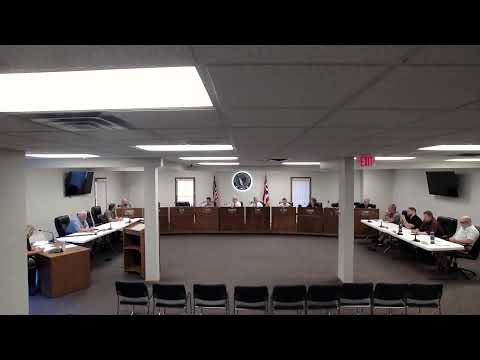
The Pataskala City Council voted to adopt ordinance 2025-4494, approving an increase in municipal water rates that will take effect Jan. 1, 2026, during a regular council meeting.
Council and utility staff said the rate change is intended to cover rising operating costs — including electricity, chemicals, salaries and health insurance — and to support system repairs and future capacity improvements.
A utility committee member told the council that the city’s minimum billed usage will not change, saying, “We have a minimum amount of usage of 3,000 gallons. It’s been that way since 2004.” The member also reported that the U.S. Environmental Protection Agency tested the city’s two well fields for 25 PFAS variants and found none in the wells.
During committee reports, utility officials described planned use of ARPA funds for the Creek Road force main project, saying remaining ARPA money will be applied to design work for a planned treatment-plant expansion. The project’s design is at about 15% completion, and preliminary plans call for increasing capacity from 2 million gallons per day (MGD) to 3 MGD to meet projected future demand.
The utility department is also recruiting a permanent utility director; city staff confirmed four applications were received and are under administrative review. Council members asked staff to continue providing clear, public-facing information about the rate change and the capital projects that the increased revenue will support.
The ordinance to raise rates was moved by Council Member Walter and seconded by Council Member Epperson; the motion carried on a unanimous roll call. Council discussion before the vote focused on transparency about what costs the increase covers and confirmation that minimum charges and billing structures beyond the rates themselves were not being altered in this action.
City officials said further design work and procurement actions will follow standard public‑works procedures and that project schedules and spending will be reported to council in subsequent meetings.