Get Full Government Meeting Transcripts, Videos, & Alerts Forever!
Get email alerts on the Short Term Rentals topic
No spam. Unsubscribe anytime.
Louisa County staff report few short‑term rental complaints in May; enforcement, monitoring to continue
Summary
County staff said they sent reminder letters to registered short‑term‑rental operators, have begun monthly coordination with the sheriff’s office on calls for service and plan follow‑up enforcement letters; in May staff identified calls at three short‑term rental properties.
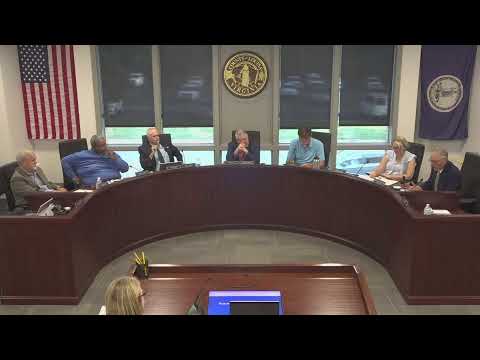
County staff updated the Board of Supervisors June 2 on short‑term rental (STR) compliance, saying the county has begun active monitoring and outreach as the summer season begins.
What staff reported: Staff said the county mailed a reminder to operators who had registered under the local short‑term rental requirements and shared the rules and regulations with them. Staff has also asked the sheriff’s office to provide a monthly log of calls for service related to short‑term rentals; the county requested May’s log and reported that May produced three properties with calls for noise complaints. “Over the month of May, we only had 3 properties that were short term rentals that also had calls for service for noise complaints,” the staff update said.
Enforcement steps and letters
Staff said it has template letters ready: (1) a reminder letter for registered operators, (2) a targeted letter for operators whose advertised occupancy may exceed their VDH (Virginia Department of Health) permit that is forwarded to VDH for follow up, and (3) a letter in response to noise complaints reminding operators of local noise rules. Staff told the board letters were sent to the contact listed on the STR registration form; most contacts were individuals rather than management companies.
Escalation and code path
Planning staff reminded the board that Louisa County Code contains a provision that allows a short‑term rental owner who fails to meet requirements to be prohibited from operating without obtaining a conditional use permit (CUP) from the Board of Supervisors (citing the applicable ordinance language). Staff said the current approach emphasizes outreach and tracking, and the county will report back with a fuller season’s data after the summer — staff suggested a report in September after the busy season.
Why it matters: The lake and other tourist areas in the county see concentrated STR activity in late spring and summer. County staff said the monthly sheriff’s reports and the mailing campaign are intended to identify compliance gaps quickly and to provide documented outreach before pursuing formal code enforcement or a CUP.
Next steps: Staff will continue monthly coordination with the sheriff’s office, send targeted reminder letters, and produce a seasonal report in September summarizing complaints and any recommended ordinance changes or enforcement steps.