Get Full Government Meeting Transcripts, Videos, & Alerts Forever!
Get email alerts on the Land Use topic
No spam. Unsubscribe anytime.
Bloomington council approves Phase 1 small‑business ordinance with eased façade rule
Summary
The City Council adopted changes to zoning and building standards to ease requirements for small businesses, including a lowered primary/secondary exterior material ratio, revised odor‑mitigation rules, added parking flexibility and clarified rooftop screening. The ordinance passed 5–2; two council members voted no.
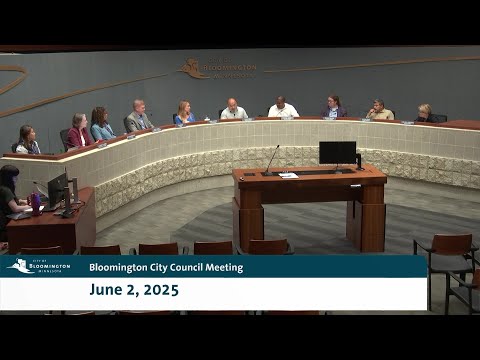
Bloomington City Council on Monday approved a package of Phase 1 small‑business code changes aimed at making it easier for small and existing commercial property owners to retrofit and reuse space in older commercial nodes.
The ordinance—amending chapters 9, 10 and 21 of the city code—struck the city’s longstanding 85% primary/15% secondary exterior material ratio and replaced it with a 65%/35% split. Council voted 5–2 to adopt the ordinance, with Mayor Tim Bussey and Council Member Lohman recorded as the two opposing votes.
The changes also reduced the required separation distance for odor mitigation systems from 250 feet to 150 feet, clarified that the distance is measured from an exhaust location to the nearest residential dwelling, removed an engineer’s formal certification requirement so the city building official may approve systems as part of trade permit review, and exempted odor mitigation for Type 2 hoods while retaining it for Type 1 hoods. A seventh parking flexibility measure allows existing commercial or industrial buildings or tenant spaces of 10,000 square feet or less to seek a 25% reduction in required parking if staff determine the site is constrained. Rooftop mechanical screening is now required only when visible from the ground level of an adjacent sidewalk or public street, and exhaust pipes are explicitly exempted from screening requirements.
Planning Superintendent Dakota Castende summarized the four main topic areas staff considered, saying the odor language changes were intended to “have a more clear measurement and rationale for requiring odor mitigation” and to reduce cost and process burdens on business owners. Castende also told council staff would return later this year with further work on trash enclosure standards, which the planning commission and council identified as needing more discussion.
Supporters of the revisions, including council members who urged flexibility for owners of older, smaller buildings, argued the measures would remove unnecessary hurdles to reuse and reinvestment in neighborhood commercial properties. Opponents said the council should preserve higher exterior material standards that they believe contribute to Bloomington’s character.
A member of the planning commission had earlier recommended retaining the 85/15 material ratio by a 6–1 vote; staff presented that recommendation along with an alternative motion to adopt the 65/35 ratio. Council Member D'Alessandro, who offered the motion to adopt the staff‑recommended 65/35 ratio, framed the change as a tool to make it easier for small businesses to occupy and upgrade older spaces.
City staff and council members also discussed enforcement: the ordinance adds building maintenance standards drawn from the International Property Maintenance Code so environmental health staff can issue correction notices for deteriorated painted or coated surfaces. Planning Manager Johnson told the council that, where complex development approvals exist, staff would evaluate any operational changes against prior conditions of approval and consult legal if necessary.
The council approved summary publication of the ordinance language as required by charter procedure at a subsequent vote that carried 7–0.
What’s next: Staff will implement the new code language after publication and will bring a follow‑up item on trash enclosure standards later this year.