Get Full Government Meeting Transcripts, Videos, & Alerts Forever!
Get email alerts on the Mobile Food Vendors topic
No spam. Unsubscribe anytime.
Tiffin council hears business owners, delays final action on mobile food vendor rules
Summary
Council introduced amendments to Chapter 7-23 governing mobile food vendors and discussed permit fees, location rules and multi-day operations after testimony from a local food-trailer owner; a motion to table failed for lack of a second.
Tiffin City Council members heard extended discussion Tuesday about proposed changes to Chapter 7-23 of the city codified ordinances that would regulate mobile food vendors, including new permit types, fees and rules for multi-day operations.
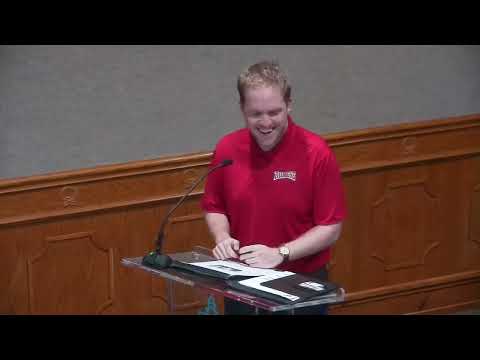
The issue drew public comment from Jamie Faidley, owner of James Markets, who said she has invested about $30,000 in a food trailer and asked for “special consideration” rather than special treatment if the city adopts a weekly fee or location restrictions. “A hundred dollars a month for someone like me… is just like, oh, shoot. One more bill I have today,” Faidley said, and offered to take safety steps such as caging or storing propane tanks overnight.
The ordinance introducing chapter changes was presented as the first reading of Ordinance 2025-54 to amend chapter 7-23; Law Director Zachary Fowler explained the draft language and enforcement approach. Fowler said the current ordinance text requires that “when the operation ceases they are to do that, to tear down,” and offered three optional drafting approaches for how the city might treat vendors who remain at a location for several days under a location permit.
Council debate focused on two main areas: whether vendors may remain in a permitted city location for multiple consecutive days without tearing down each day; and how to treat vendors operating from parking spaces adjacent to their property or with written permission from adjoining property owners. Fowler explained that the city administrator issues and enforces permits and that the draft clarifies when a vendor operating in a parking space must have both a location permit and the required license.
Council member Casper Hahnemann moved to table the ordinance to allow more outreach to food-truck operators; the motion received no second and failed. Hahnemann stated, “I'd like to make a motion to table ordinance 2,554 so that we have more time for discussion,” and later said he intended to bring a tabling motion at the next meeting if needed.
Mayor Lee Wilkinson and other council members encouraged faster resolution so rules are clear during the warm-weather season, but several councilors and committee members asked for additional input from vendors and committee members representing wards not present at the committee meeting. Council members requested a list of licensed food trucks; the city administrator said he would provide a spreadsheet of issued permits.
The law director noted a few drafting clarifications already made to the version before council, including explicit language about location permits for sidewalks and parking spaces, and suggested council consider one of three alternative approaches he provided to handle multi-day vendor operations. Council indicated they would continue review in committee and at future council meetings; the ordinance remains in the introduced stage with no final vote tonight.
The discussion included confirmations that certain temporary permit fees would be annualized in the draft (a $29 annual EyeRolla service fee and a $50 per-year permit for special events were discussed at committee) and that the city’s two-hour parking rule (9 a.m.–5 p.m.) would not apply to an operating mobile food vehicle. Those fee amounts and the EyeRolla system were presented earlier at the Law and Community Planning committee by Fire Chief Rob Chapelle and city staff.
Council members asked staff to draft clarified ordinance language that would address (1) multi-day operation allowances tied to a location permit, (2) a clear appeals or grandfathering path for vendors who have previously operated under special accommodations, and (3) a complete list of currently licensed mobile food vendors so council can consult more stakeholders before moving to final passage.
Council did not take final action on the ordinance; staff were directed to return revised language to committee and to provide additional information requested by council members.