Get Full Government Meeting Transcripts, Videos, & Alerts Forever!
Get email alerts on the Derelict Vessels topic
No spam. Unsubscribe anytime.
Florida FWC outlines derelict‑vessel enforcement changes, field procedures and post‑storm timelines
Summary
Florida Fish and Wildlife described the at‑risk/derelict vessel definitions, pre‑storm asset relocation timeline, the post‑storm removal adjudication process and recent 2025 statutory changes that increase penalties and streamline enforcement.
Florida Fish and Wildlife officers told Port Canaveral stakeholders how the agency handles at‑risk and derelict vessels before and after storms, and summarized 2025 statutory changes that broaden enforcement powers and increase penalties for repeat offenders.
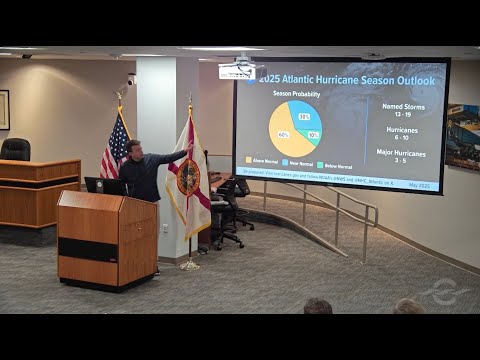
Lieutenant Ray Cebula of the Florida Fish and Wildlife Conservation Commission (FWC) said the agency distinguishes “at‑risk” vessels — craft taking on water, lacking means to dewater, with open compartments, broken loose or tied to unpermitted structures — from “derelict” vessels that are wrecked, sunk or otherwise incapable of extricating themselves. He explained the pre‑storm timeline used by FWC: 72 hours before landfall officers do surveys to identify owners; 48 hours before landfall most agency vessels are removed from the water; and 24 hours before landfall remaining agency vessels are pulled to reduce asset loss.
Cebula said post‑storm response focuses first on search and rescue, then on surveys and documentation of derelict craft. When owners can be identified and hold valid insurance, FWC generally expects owners or insurers to remove damaged boats. If owners surrender a titled boat, FWC can use an expedited “waiver” process to take possession and remove a vessel without full adjudication; if owners do not agree, statutory due process is followed — a procedure Cebula said can take roughly three months before contracting and removal are completed.
Cebula outlined 2025 legislative changes affecting enforcement: the at‑risk statute will allow the agency to request proof of propulsion more promptly; repeated at‑risk citations (three in 24 months) allow earlier removal; derelict‑vessel penalties were raised so the second offense becomes a third‑degree felony and a third offense becomes a second‑degree felony; and the definition of “owner” was tightened so persons living aboard or acting as caretakers can be held accountable for vessel responsibilities. He said these changes were intended to close loopholes related to informal title transfers and nonadjudicated citations.
Cebula also noted a procedural change to safety inspections that begins July 1: officers may no longer stop a vessel solely to conduct a routine safety inspection without probable cause of a violation; stops to check fishing and hunting compliance will continue.
The FWC recommended that boat owners document their vessels 72 hours before a forecasted storm, secure clear ownership information, and report derelict or sunk vessels to the FWC interactive post‑storm map; the agency advised the public that actual removal and disposal often occur weeks to months after a storm depending on adjudication and contracting timelines.