Get Full Government Meeting Transcripts, Videos, & Alerts Forever!
Get email alerts on the Multilingual Programming topic
No spam. Unsubscribe anytime.
MMSD reports about 5,300 English learners, outlines shift toward dual‑language immersion
Summary
District staff briefed the board on multilingual programming, reporting nearly 5,300 current English learners across about 102 languages, plans to convert remaining developmental bilingual programs to dual‑language immersion and steps to expand bilingual teacher licensing and transportation access.
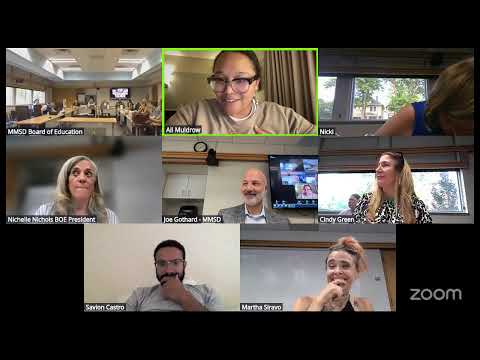
Madison Metropolitan School District officials updated the board at an Instruction Work Group meeting on the size and direction of the district’s multilingual programming, saying the district serves one of the largest English‑learner populations in Wisconsin.
Dr. Joe Gothard, superintendent, told the board “our ELL percentage and number of children in Madison who receive multilingual services is larger than 90% of school districts in the state of Wisconsin.” The district said it has a current snapshot of “over 5,000, close to 5,300 English learners” and about 1,400 former English learners across roughly 102 languages.
District presenters said program data show both strengths and gaps. Staff reported 69 students in the Hmong bilingual K–7 program, and that more than 4,500 students participate in Spanish dual‑language immersion (DLI) districtwide. Officials said bilingual‑bicultural state statute requirements mean the district must offer bilingual programming when enrollment thresholds are met. The district described plans to review its last two developmental bilingual education (DBE) sites with the goal of shifting them to DLI where appropriate.
Leah Spiedelbon, multilingual programs presenter, explained how the district measures English development and academic proficiency: “access for English language learners... measures four language domains — listening, speaking, reading and writing,” and district staff also use Forward assessments in grades K–8 for English language arts and math. Presenters noted former English learners typically outperform current English learners on reading and math indicators, a pattern the district said tracks national trends.
Staff outlined key constraints that affect program changes: staffing (bilingual teachers are a high‑need, hard‑to‑fill position), facility and space configuration, transportation for students to access programs, and demographic shifts across the city. Cindy Green and presenters described partnerships with local higher‑education providers and tuition reimbursement programs designed to increase bilingual licensing, citing Edgewood College, UW (licensure options) and UW–Whitewater’s accelerated program as examples. The district said it has requested additional budget funding to expand tuition reimbursement for staff pursuing bilingual or ESL licenses.
Board members asked about specific operational details. Board Member Vander Meulen asked how access testing accounts for students with learning disabilities; the presenters said students with individualized education programs (IEPs) can qualify for alternate access testing and individualized growth targets. Members also asked how classroom teachers who are not bilingual are supported; presenters described co‑planning, coaching and teacher‑leader supports in buildings and noted purchase of English language development materials under ESSA funds.
District staff said they are phasing changes carefully. Converting DBE to DLI would be phased (for example, starting in kindergarten and adding grades over time), and the district plans to align any program shifts with broader enrollment and boundary review work to ensure access and transportation are considered.
Officials emphasized the district’s cross‑department work on curriculum alignment (including mapping WIDA ELD standards into core content), staffing pipelines and community engagement before program changes are made. No formal action or vote on program conversions was taken at the meeting; presenters described these as planning and implementation considerations going into the 2025–26 school year.