Get Full Government Meeting Transcripts, Videos, & Alerts Forever!
Get email alerts on the Ethics Code topic
No spam. Unsubscribe anytime.
Lincoln council tables proposed code-of-conduct ordinance, asks for ethics committee work
Summary
The Lincoln City Council voted to table an ordinance to create section 1-6-10 of the city code — a code of conduct for elected officials — and asked members to form or flesh out an ethics committee to develop enforceable language about meetings, unexcused absences and sanctions.
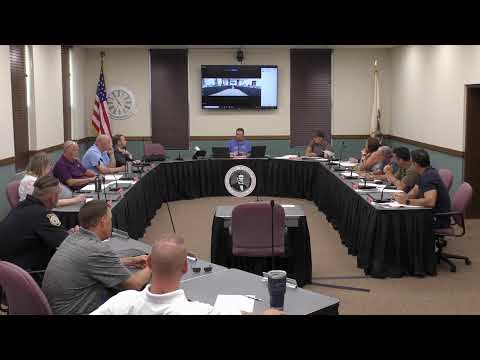
The Lincoln City Council on June 2 voted to table an ordinance to create section 1-6-10 of the Lincoln City Code, a proposed code of conduct for elected officials, and asked members to form a committee to develop clearer, enforceable language.
Supporters said the draft provides a useful framework but lacks definitions they consider necessary to make enforcement practical. "I just felt like we needed to...nail that down," Alderman McClellan said, asking for explicit definitions of what counts as a meeting and what constitutes an "unexcused absence." She moved to table the ordinance so a committee could craft those details; Alderman O'Donohue seconded the motion.
The ordinance as drafted was described as a council-specific code: City code chapter 1-6 designates city council provisions, and the proposed section 1-6-10 would set conduct expectations for elected council members. City staff and the city attorney explained that, as written, 1-6-10 would apply to the council; extending similar language to employees or other elected officials would require placing parallel provisions in other code sections.
Council members who spoke about the measure raised several recurring concerns. Several asked whether the code would apply only during formal meetings or in "any capacity" an elected official represents the city outside meetings. "If you're an elected official, you're an elected official 24/7," Alderman Bateman said, arguing the language should cover conduct at all times. Others sought procedural clarity about how investigations would proceed and what protections would exist for officials under review. The city attorney and staff indicated the ethics committee would be advisory and that any formal censure or sanction would come to the full council after a committee recommendation.
Council members proposed concrete steps to make the document operational: write explicit definitions for meetings and unexcused absences; specify committee composition and whether it should include a public member; and set clear, enforceable procedures for investigations and recommendations to council. "I think it would be good to codify an ethics committee, get a member of the public, at least one on it," McClellan said.
The motion to table carried on a roll-call vote. The mayor indicated the item will be brought back at the next Committee of the Whole meeting for further work and possible codification.
The discussion did not result in a final ordinance; instead the council directed further work on committee composition, definitional language and enforcement processes.
Ending: The council left the substance of a code in committee to allow precise, enforceable language to be drafted; members asked that the committee be formed promptly and return the item to the Committee of the Whole for consideration.