Get Full Government Meeting Transcripts, Videos, & Alerts Forever!
Get email alerts on the Code Enforcement topic
No spam. Unsubscribe anytime.
Baltimore Environmental Control Board seeks staffing, digital records upgrades; council asks for Care A Lot breakdown
Summary
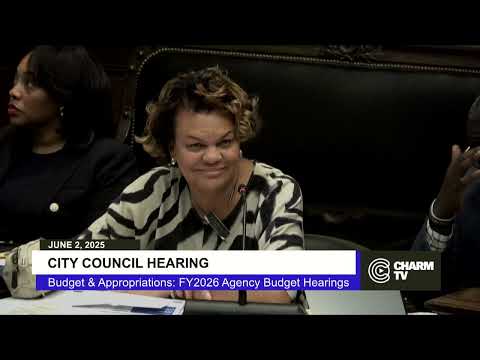
Environmental Control Board director Eva Andries told a Baltimore City Council committee the agency plans hires, document-management updates and performance targets for FY26; council members requested a breakdown of Care A Lot participants by district and discussed possible future ECB role for parking appeals.
At a Baltimore City Council committee meeting, Eva Andries, executive director of the Environmental Control Board, outlined the agency’s FY26 priorities: hiring for collections and community liaison roles, updating document-retention policies to reflect electronic files, and maintaining performance targets for tax-sale reviews and hearing scheduling.
The Environmental Control Board, Andries said, primarily adjudicates environmental citations and also runs the Be More Beautiful grant and community-support programs. “The Environmental Control Board has 1 main service, which is adjudicating environmental citations,” Andries said. She described Be More Beautiful activities — including grants for cleaning and greening projects and community education — as paired with the adjudication process to “assist in changing behavior related to quality of life and public safety issues.”
Andries told the committee the agency plans to hire a paralegal to focus on collections and to create a liaison position to run greening workshops, urban farming and volunteerism. She said the board has moved many hearing files to digital formats but still must address years of paper files and update retention schedules to reflect the current processes.
Andries identified two performance measures: the annual tax-sale review, which the agency normally targets at about two weeks, and scheduling hearings within 60 days of a request. “We tell people that it can take 2 weeks at minimum for the review to be completed, which is why the performance target is usually 14 days,” she said, adding that last year’s volume led staff to reduce the FY26 target to 13 days. On hearing scheduling, she said the agency keeps a 90% target for hearings set within 60 days and has met the target in prior years but that year-to-year factors can cause fluctuations.
Council members pressed for additional detail on program reach and funding. Vice President Middleton asked for an exact count and district breakdown of Care A Lot participants for fiscal year 2025; Andries said the largest Be More Beautiful grant program had “about 62 to 65 communities” this year and agreed to provide location information and a district-by-district breakdown, estimating it would take about a week to 10 days to compile. The committee recorded that as a staff request for follow-up.
Councilman Blanchard asked why Be More Beautiful funding appeared to decrease. Andries said the apparent reduction reflected shifting temporary salary funds into the permanent liaison position, not a cut to grant awards: the grants themselves “haven't gone down at all,” she said.
Council members also raised policy questions. Councilman Blanchard asked whether the ECB could adjudicate parking-enforcement appeals if state law changes; Andries said the board has infrastructure and experience with hearings — including water bill appeals — and that taking on parking citations would be “very much in our wheelhouse,” while noting it would increase caseload and could require more hearing officers and front‑office staffing if enacted. The council described the concept as a possible FY27 legislative priority to pursue at the Maryland General Assembly.
On graffiti, Councilman Jones asked how the city addresses repeat tagging. Andries clarified the ECB does not issue graffiti citations and instead conducts hearings on citations issued by other agencies: “the environmental control board doesn't issue the citations. We just do the hearings,” she said, citing Baltimore City Code “article 1, section 40-14” as containing the enumerated violations that come before the ECB. She said Department of Housing and Community Development typically issues violation notices that place responsibility on property owners to remove graffiti.
Members thanked the ECB for community outreach and flexible, case-by-case handling in hearings. Andries noted the agency recently filled a scheduled position and an OSS (operations/support) position, which she said will help manage higher volumes tied to vacant‑building notices and other increases in casework.
The committee recorded the ECB’s commitments and will await the requested Care A Lot participant and location breakdown; the meeting recessed to return to other agenda items.