Get Full Government Meeting Transcripts, Videos, & Alerts Forever!
Get email alerts on the Municipal Finance topic
No spam. Unsubscribe anytime.
Councilors and Rec & Parks Officials Flag FY25 Shortfall, Cite Contractual Costs More Than Overtime
Summary
Baltimore City Recreation and Parks told the Budget and Appropriations Committee that FY25 spending pressures include overtime but are driven mainly by unplanned contractual maintenance and facility repairs; the agency moved facility maintenance to a separate service line and officials discussed supplemental needs and internal controls.
Baltimore City Recreation and Parks told the City Council Budget and Appropriations Committee on day three of budget hearings that the agency expects material spending pressure in fiscal 2025 driven primarily by contracted maintenance and unplanned repairs, not overtime alone.
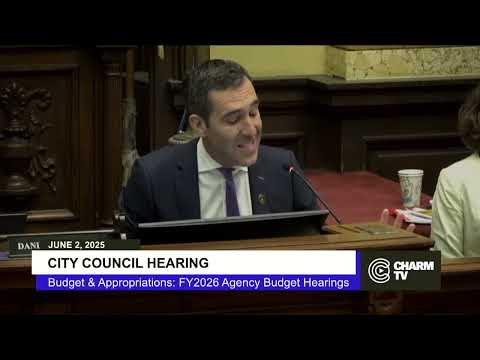
The committee chair, Councilwoman Danielle McCray, convened the hearing with a presentation from Director Moore of Baltimore City Recreation and Parks, who outlined capital projects and operating changes. Council President Z. Cohen pressed the agency on overtime after staff analysis showed overtime rose from $2.3 million in 2023 to $2.8 million in 2024. Cohen asked, “How much in overtime are you projecting to occur in fiscal year 2025?”
Why it matters: council members said recurring supplemental requests and large contract expenditures have eroded confidence in the annual budget. Cohen noted a roughly $7 million supplemental for FY24 to cover Rec and Parks overtime and contract services and said the council expects better cost controls.
What officials said: Director Moore provided actual overtime through May — “2.6 [million] as of May 31” — and said some overtime is event-driven, citing storms and major cleanups. Separately, Director Larson (budget office) told the committee that Rec and Parks’ FY25 third-quarter projection showed a $5.9 million shortfall and that “the largest portion of the deficit … is related to maintenance costs … being driven by external contracts more so than overtime.” Larson added that overtime hours for calendar-year 2025 were down versus the same period in 2024.
Agency reorganization: Director Moore explained that facility maintenance historically sat inside park maintenance; for FY26 the city moved that budget slice — roughly $6.5 million — into a distinct facility maintenance service to improve tracking and management. Moore said the move should make it easier to identify unplanned expenses such as HVAC and roof replacements and to manage warranty and capital set‑asides.
Internal controls and corrective steps: Council President Cohen referenced an auditor’s report that found deficiencies in overtime documentation and timesheet approvals. Rec and Parks’ chief of staff said the agency will revise its internal overtime policy, deliver training and pursue a Workday configuration (making the overtime comment field mandatory) to strengthen documentation. The agency also plans to reclass a fiscal position to improve payroll capacity; target dates cited for corrective items included June 30, 2025.
What was not decided: committee members pressed for clearer projections and for limits on contractor reliance; the hearing recorded requests for follow-up data but no formal motions or votes on budget changes.
Ending: Council members asked the administration and Rec and Parks to return with updated projections and reports showing the effects of the facility maintenance reorganization and steps taken to reduce unplanned contracting.