Get Full Government Meeting Transcripts, Videos, & Alerts Forever!
Get email alerts on the Library Budget And Capital topic
No spam. Unsubscribe anytime.
Enoch Pratt seeks to preserve staff levels, expand digital resources and address long-standing capital backlog
Summary
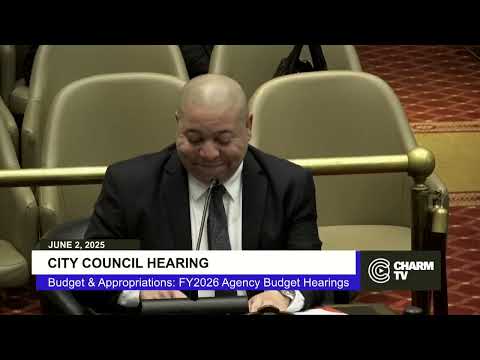
At a Baltimore City Council hearing, Enoch Pratt Free Library President Chad Helton outlined FY26 priorities—maintaining staffing, expanding e-resources and continued capital projects—and council members pressed for a fast, detailed capital-needs analysis, with special focus on Park Heights and other branches.
Chad Helton, president and CEO of the Enoch Pratt Free Library, told the Baltimore City Council the library’s FY26 budget centers on three priorities: maintaining current staffing levels, expanding digital resources and continuing capital improvements across the system.
Helton said the library saw nearly 1,200,000 visitors in 2024 and circulated more than 2,400,000 items — a 25% increase year over year — and that 123,000 people participated in library programs. He described ongoing capital work including HVAC upgrades, branch refreshes and construction of the Johnson Square branch, which he said will occupy the ground floor of a 109-unit mixed-income building and is on track for completion in the fall. He also flagged ARPA-funded redesigns of computer spaces at the Brooklyn and Reisterstown Road branches and expansion of Pratt Anywhere Labs to extend digital access in underserved neighborhoods.
Why it matters: Council members said the system’s deferred maintenance and backlog of broken elevators and other infrastructure problems are severe and need a clear citywide plan. Council President Brent Cohen asked the library to produce a detailed analysis of capital needs within two months; Vice President Odette Middleton pressed for urgency on the Park Heights branch, calling it a long-delayed priority for an underserved area.
Most important facts: Helton presented three FY26 goals—sustain infrastructure, strengthen organizational culture and expand programs and services. The budget highlights Helton cited include actively filling vacancies to hold total FTEs steady and increasing funding for e-books, audio and streaming materials to respond to substantial growth in electronic circulation. Director Larson (city budget staff) said the agency detail book contained an error about books and periodicals funding; the correct FY26 allocation is $1,500,000, up from $1,300,000 in FY25 (an increase the director described as about $207,000). The chair and council leadership requested a granular facilities assessment and timeline; Helton committed to delivering an assessment within two months.
Supporting details and context: Helton said more than 5,000 library users accessed social-impact services this past year — programs such as social workers in the library, housing navigators, peer navigators, wellness services and a lawyer-in-the-library program. He reported more than 24,000 participants in the library’s Summer Break Baltimore program and named authors and events hosted through the Writers Live series. When asked about branch-level budget breakdowns, library staff said the current budget is not broken down by branch; the director said the library will consider reorganizing budget services to allow more granular reporting for future fiscal cycles.
Council questions and staff responses: Council members pressed the library on (1) the scale of deferred maintenance and elevators that don’t work, (2) the need for a Park Heights timeline and partnership with local funders such as Park Heights Renaissance, and (3) whether programming funding is secured. Helton said most programming is supported by private fundraising, with some state and federal grants. Shane Williams, chief of end-user services, confirmed that grant-management software help is currently only available at the central library and said staff can work to expand that access.
Ending: The committee recessed and scheduled the hearing to continue the following morning. No formal vote or ordinance was taken during this part of the hearing; council members requested follow-up information and a capital-needs assessment from library leadership.