Get Full Government Meeting Transcripts, Videos, & Alerts Forever!
Get email alerts on the Municipal Pay Plan topic
No spam. Unsubscribe anytime.
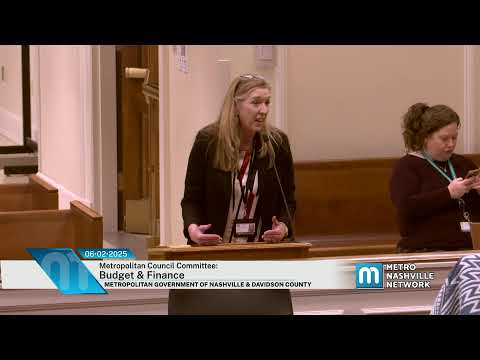
Metro committee defers contested 15-year pay-plan restructure after extended debate
Summary
The Metro Council Budget & Finance Committee on June 2 deferred a proposed 15‑year overhaul of its pay plan after members raised questions about cost, timing and fairness.
The Metro Council Budget & Finance Committee on June 2 deferred consideration for one meeting of a proposed, 15‑year pay-plan restructure that would change pay ranges and step increases for general employees and other city workers.
Council members pressed administration and finance officials for details about who would benefit from the plan, how the increases would be phased, and what would happen to employees if the plan were rejected. Director Hall and Mary Jo Wiggins of Metro finance told the committee that implementation this year would cost roughly $55,800,000 in additional general‑fund spending and that pay ranges would be adjusted upward — roughly 7–8% at the low end — before distributing merit and across‑the‑board increases.
Committee members said they supported moving toward more market‑competitive pay but objected to the proposed structure of 2% merit steps spread over 15 years and a 1% across‑the‑board component, which some members said would deliver smaller raises over time than alternative proposals discussed during the meeting. “If this pay plan is passed, they’re going to be stuck with 2% steps for 15 years,” said Council member Johnston. “We can do better.”
Supporters on the committee, including Vice Chair Toombs and others, said the proposed plan raises base pay ranges (so many employees would see an immediate market adjustment), adds merit steps where the current plan had fewer steps, and creates a predictable mechanism for annual adjustments. Director Hall said the market‑range increases move midpoints so employees reach market faster — roughly after three years instead of five — and that initial implementation combines the market adjustment, a merit increase, and a small across‑the‑board component.
Committee members repeatedly asked whether the council could reject the plan without leaving employees without raises on July 1. Director Darby and Director Hall said that, under the charter, a rejected plan would be returned to the Civil Service Commission to formulate another pay plan; speakers cautioned that creating a replacement plan before the fiscal year deadline may not be feasible and that employees could receive no increases on July 1 if the plan were not adopted. Director Darby said the council’s budget ordinance contains a placeholder of $50 million for pay‑plan improvements, but that the absence of an adopted plan would likely mean the current plan remained in effect.
Council members asked for numerical, employee‑level comparisons showing current pay vs. proposed pay (without names) so that elected officials could evaluate impacts by pay grade and years of service. Several members asked for a side‑by‑side table comparing the old plan and the proposed plan’s outcomes; Director Hall and staff agreed to provide that analysis.
After extended discussion, the committee voted to defer the item one meeting so the pay plan could “track with the budget” and members could review more detail. The deferral passed unanimously, 11–0.
The deferral means the pay plan will return to the committee before the council finalizes the budget. The administration said it would continue to work with the council to clarify cost allocation across funds and to provide the requested side‑by‑side comparisons.
The meeting record shows the committee acted by motion to defer; no final adoption of the pay plan occurred on June 2.