Get Full Government Meeting Transcripts, Videos, & Alerts Forever!
Get email alerts on the Municipal Budget Tax Increase topic
No spam. Unsubscribe anytime.
Matthews commissioners debate cuts to avoid 1.3¢ tax increase as bond-funded projects loom
Summary
Town officials debated whether to find cuts to avoid a proposed 1.3¢ property tax increase to fund bond debt service, focusing discussion on parks and recreation, the tourism fund, subscription software costs and bond arbitrage rules.
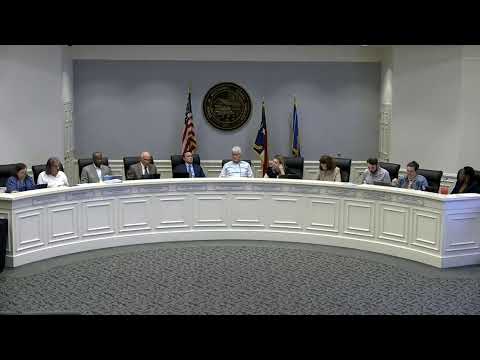
Town Manager Becky Hall and commissioners spent most of a June 2 budget workshop debating whether the town can avoid a proposed 1.3¢ property tax increase tied to bond debt service by trimming operating costs.
The discussion narrowed on parks and recreation spending, the tourism fund’s accounting, subscription-based software and other line items as commissioners pressed for specific cuts that would close a roughly $903,000 gap without raising property taxes.
Why it matters: The board previously authorized pursuing bonds voters approved; commissioners said the resulting debt service is the primary driver of the tax increase under consideration. That has generated sustained debate about whether the town should reduce current services to avoid raising the tax rate and how much control the town has over certain revenue and expense flows.
"Do we have the will and the want to pass a budget without a tax increase?" Commissioner Leon Threatt asked, summing up the debate and urging colleagues to look for cuts. "Because I believe the how will quickly come when we have the will to do so."
Town Manager Becky Hall and finance staff walked the board through a small, corrected bookkeeping change of $79 that moved amounts between the general fund and the tourism fund but did not affect the town’s overall budget. Hall also explained how the tourism fund operates separately from the general fund and said trimming tourism-funded events would not reduce the town’s property tax rate. "So in no scenario... that number is always 0 because it's its own little fund that lives on its own account," Hall said, describing the accounting flow for community-center and special-events revenues.
Commissioners examined several specific potential savings identified in correspondence from Commissioner Threatt and in board discussion. Finance details cited during the workshop included:
- A corrected miscellaneous revenue line that increased from $100,000 to $100,079, with a $79 offset in the tourism fund transfer.
- Tourism-related budgets totaling about $1,711,000, against direct revenues of roughly $720,000 (including community-center revenues and recreation fees); the remaining amounts are covered by the tourism fund balance.
- Recreation center revenues of about $242,000 versus roughly $309,000 in expenses, meaning programs cannot be cut without also reducing associated revenue.
- A bond described in conversation as roughly $11 million whose debt service is the main driver of the proposed 1.3¢ increase.
Board members also pressed staff for itemized breakdowns of categories they flagged as possible savings: professional dues, professional services, information-technology subscriptions, departmental supplies and copier/phone contracts. Mayor Pro Tem Tim Hoover and Commissioner Urban asked for multi-year deltas on subscription costs to identify growth in recurring fees.
Several commissioners argued against cutting parks and events. Commissioner Urban said the bond was intended "to infuse and stop the bleeding" on roads and parks that have lagged for years. Commissioner Garner emphasized the economic return from events and parks, describing them as the town’s signature amenities and noting spillover benefits for local businesses.
Other contested items and clarifications on funding and contracts included:
- Professional services: Commissioners discussed a recurring lobbyist contract (about $59,250 cited in the meeting). Some board members said the town needs lobbying presence in Raleigh; others suggested it could be cut.
- Tourism fund and special events: Staff reiterated that event expenditures are supported primarily from tourism revenues and sponsorships; cutting events reduces both expenses and the revenues those events generate and therefore does not translate directly to property-tax savings.
- Contracts and consulting: Commissioners asked about two contracts with Fries and Nichols (a smaller contract around $7,000 for a culvert study and a larger hydraulic/hydrology study in the tens of thousands) after noticing line-item variances.
- Bond arbitrage: Hall reported guidance from bond counsel Brandon Lofton of Robinson Bradshaw, warning that "the bond proceeds have to be spent fully spent within 2 years, and that includes all the investment earnings on the bond proceeds. And spending the investment earnings on debt service would not enable the town to meet the spending exception and avoid owing rebate to the IRS." Hall said the town expects construction to extend beyond 24 months and that arbitrage liability is likely.
- Police and public-safety costs: Commissioners reviewed police overtime (about $167,000 in the police budget), clarifying that overtime for routine patrol is budgeted separately from overtime charged to special events. Radio-user fees (about $86,700) were explained as payments to use the Charlotte-owned radio network for countywide interoperability.
- Shared contracts and procurement: Staff said many contracts (copiers, fuel via the state's WEX contract, some phone plans) are procured through broader government contracts, and copier services were recently renegotiated under a consolidated Sharp contract.
What the board asked staff to do: Commissioners repeatedly requested more detailed, line-item breakdowns — including vendor names, subscription levels, and multi-year spending deltas — and asked staff to model the operational impact of cutting subscription software or other services. Several commissioners said they would continue to comb the 300+ page budget packet for potential cuts.
Next steps and procedural outcome: Town staff recommended an additional work session to answer outstanding requests and allow the board time to vet options before the first opportunity to approve the budget on June 9. With unresolved questions still in play, the board moved into closed session at the end of the workshop; the motion to enter closed session under North Carolina law was seconded and approved, and the board adjourned to the Jordan Room for the closed-session discussion.
The budget workshop included repeated requests for more granular information and competing views among commissioners on whether the town should use current revenues and cuts to avoid a tax increase or proceed with the bond-related debt service funded by the 1.3¢ increase voters previously authorized the town to pursue.