
Task force recommends standard reporting of required Excel in CTE fees, drops optional fees
Get AI-powered insights, summaries, and transcripts
Subscribe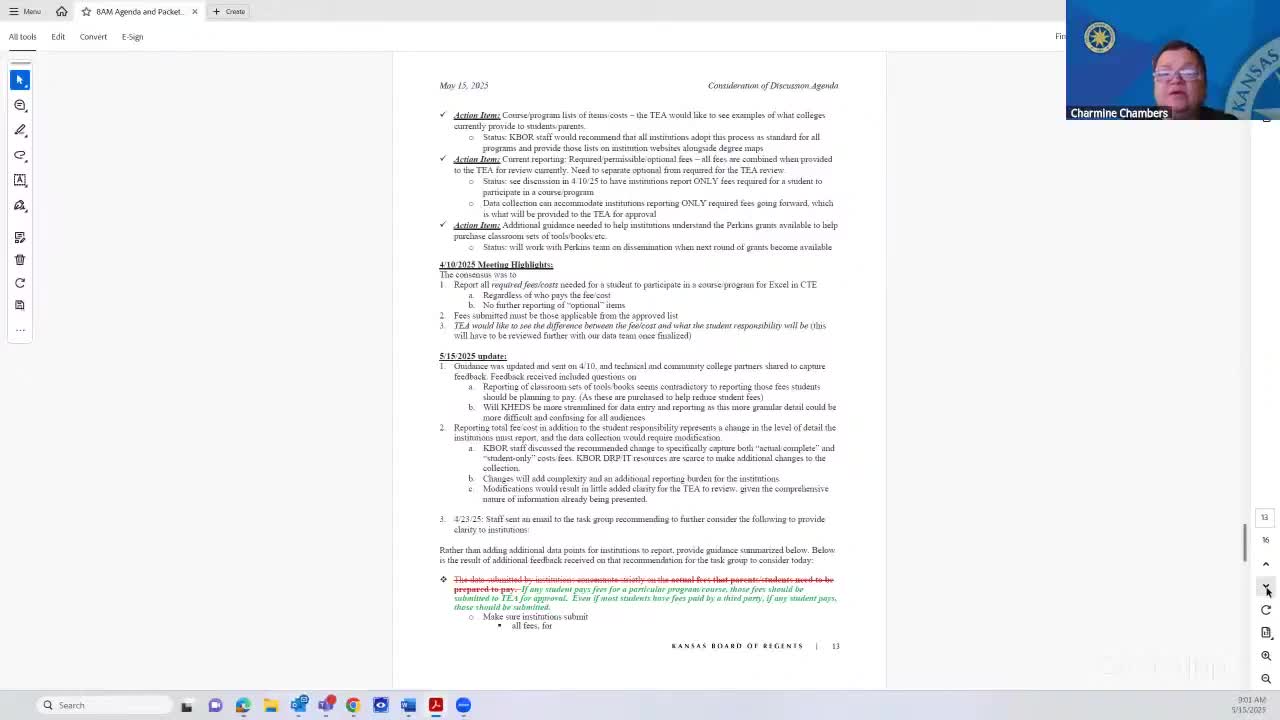
Summary
A staff task force recommended that colleges report required student fees for Excel in CTE courses (regardless of who pays), drop optional fees from reporting, provide a narrative explaining offsets and publish fee lists alongside degree maps; the committee received the report as information.
Board staff and a task force of college representatives recommended standardizing how institutions report student fees for Excel in CTE courses: report required fees only, report totals regardless of whether a third party pays them, provide a brief narrative explaining offsets, and publish fee lists alongside program degree maps.
The recommendation aims to create clearer, more comparable information for high school students and families about expected out-of-pocket costs for technical courses offered through Excel in CTE, staff said. The group also encouraged use of Perkins grants and other resources that help purchase classroom tools and reduce fees.
Director Chambers introduced the task force’s work and said staff proposed that institutions submit only required fees — not optional items — and report the highest possible cost with an explanatory narrative describing any internal discounting or offset mechanisms. “If any student pays a fee for a particular program, course, or item, those fees should be submitted,” Chambers said.
Vice Chair Rice, who chaired the subgroup, and participating college representatives said the process should improve comparability across institutions and make it easier for the TEA and the public to spot outliers and ask for explanations. Marlon at Coffeyville noted that colleges have reported questions back to presidents and CFOs and said the approach should help produce “apples-to-apples” comparisons.
The committee treated the item as informational; no formal action was required. Staff said they expect to collect the standardized fee reports and, after a January review cycle, present changes and anomalies to the TEA for oversight and possible follow-up.
The board will continue staff training and outreach so institutions implement the new reporting approach in time for the next review cycle.