Get Full Government Meeting Transcripts, Videos, & Alerts Forever!
Get email alerts on the Zoning Bza topic
No spam. Unsubscribe anytime.
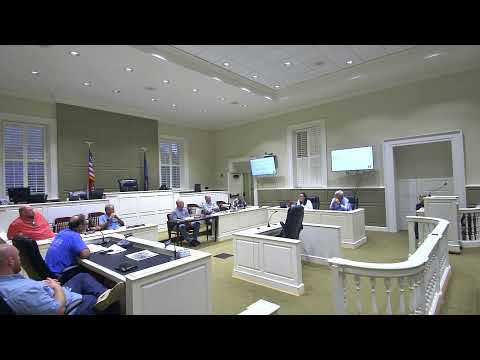
Cumberland County planning commission updates Board of Zoning Appeals rules to match Virginia code
Summary
The Cumberland County Planning Commission voted to adopt amendments to the county's Board of Zoning Appeals (BZA) ordinance to align local language with changes in the Code of Virginia, clarifying variance standards, appeal timing and the writ of certiorari review process.
The Cumberland County Planning Commission voted to adopt a code amendment (CA 24-04) to revise the county's Board of Zoning Appeals (BZA) ordinance and bring local rules into alignment with changes made in the Code of Virginia.
The amendment updates the definition of a variance to include dimensional standards such as height and replaces the older hardship standard with the state's current "unreasonably restrict the utilization of the property" language, adds statutory powers and duties moved by the state code, and clarifies the appeals and writ of certiorari procedures for circuit court review.
Planning staff said the draft is the same text the county had previously reviewed and that the county attorney has reviewed the updated language. "This is the same text that we had looked at probably late last year or early this year," the staff presenter said, noting scheduling delays had postponed the public hearing. The staff report outlines changes in several sections (74-2, 74-8-21, 74-8-27 and related paragraphs), including a requirement that the applicant bears the burden of proof by a preponderance of the evidence for a variance.
Under the revision, an application for a variance "shall be granted if the evidence shows that the strict application of the terms of the chapter would unreasonably restrict the utilization of the property" or if granting a variance would alleviate specified hardships. The draft also inserts criteria the BZA should consider (for example, whether the property interest was acquired in good faith and not created by the applicant, whether the variance will substantially detract from adjacent property owners, and whether the condition is general enough to require a code amendment).
The amendment clarifies notice and appeal timing: a zoning violation or written order must include the applicable appeal fee and reference where to obtain appeal filing information, and the appeal period does not begin until the zoning administrator's written order is sent by registered or certified mail or posted at the owner's last known address. The ordinance text further states that an owner's actual notice of the violation or the owner's active participation in an appeal hearing will waive the owner's right to challenge a board decision based on failure to receive notice.
A commissioner asked whether the clause could let people claim they did not get mailed notice and thereby delay or overturn decisions. The staff response stressed that the county is following state procedures and that certified mail or evidence of mailing is the county's protection: "We've done what we're required to do by state code," staff said. Staff also described the practical code-enforcement sequence: initial verification and attempts to achieve compliance precede issuance of a formal notice of violation.
The planning commission closed the public hearing and voted to adopt the amendment as presented. The adoption replaces sections of the county ordinance where state code moved or revised statutory language and preserves the applicant's ability to seek review of BZA decisions by writ of certiorari in the circuit court, subject to the procedures described in the adopted text.
The commission did not make additional changes to the text at the meeting; staff and the county attorney had reviewed the wording prior to the hearing. The approved amendment will be recorded in the county code and applied to future BZA proceedings.