Get Full Government Meeting Transcripts, Videos, & Alerts Forever!
Get email alerts on the Physician Workforce Actionable Recommendations topic
No spam. Unsubscribe anytime.
Physician workforce panel refocuses on actionable recommendations amid looming Medicaid cuts
Summary
Members of the state physician workforce working group voted to shift their meeting schedule and agreed to retool their process to produce ‘actionable’ recommendations, while several speakers warned that pending federal Medicaid cuts and state budget constraints will limit what lawmakers can fund.
Physician workforce working group members agreed to shift their regular meeting date and to redesign their process to produce recommendations that can realistically be implemented, while warning that looming federal Medicaid funding cuts could sharply constrain options.
The group, convened to carry out PA 19-related work on physician supply and practice environment, voted to move its regular meeting from the second to the third Tuesday of each month and discussed a tighter timeline and a new meeting format that pairs a presenter (internal or external) with a member who would lead the reaction and discussion.
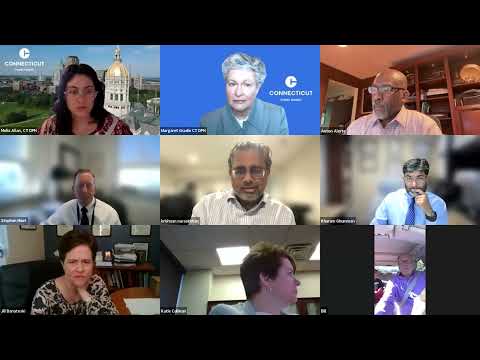
The change in approach was framed by Krishna Narasimhan, chairing the session and identified as a family medicine physician and chair of the department of family medicine at Stanford Health, who said the group needs “to reverse engineer” recommendations so they can be acted upon: “How do we get to recommendations that we can have acted upon that have meaningful impact?”
Why it matters: members said prior reports produced detailed recommendations that were not implemented. Several speakers argued the group must emphasize feasibility and political buy-in so its proposals are not merely advisory documents that “sit on a shelf.” Bill Pettit, a meeting participant, told the group, “I think the critical word he used was actionable, and I think I don't see any way to make a significant change without some money.”
Members and staff flagged an immediate fiscal threat. A staff member identified as Emily told the group that federal action could force the Connecticut General Assembly into a special session and that the state faces “a minimum of around $476,000,000 just on the FMAP projection,” a reference to potential reductions in federal Medicaid matching funds. She said timing for any special state session could be August or later, depending on Congress’s schedule. Because federal changes could arrive in phases, she warned the group to plan multiple scenarios for constrained budgets.
Several members urged the working group to balance ideal evidence-based proposals with politically realistic options. One recurring suggestion was that the group should decide which recommendations would require new state funding and which could proceed with existing resources or regulatory changes, then pursue legislative and executive-branch champions early so proposals have a better chance of enactment.
The group also discussed not redoing work already done by the 2023 convening on topics such as loan forgiveness, noncompetes and network adequacy, but members asked staff to compile a clear status table showing which prior recommendations have been implemented, which remain pending, and which agencies or committees (for example, the legislature’s Public Health Committee) are responsible for follow-up.
Next steps: members agreed to the schedule change and to a meeting format that will include 15–20 minute presentations followed by facilitated discussion. Staff said they will distribute the previous report and a proposed timeline, and will solicit volunteers to moderate future sessions. The group also asked the Department of Public Health to provide a focused briefing on the state student loan repayment program and its physician uptake.
The next meeting will reflect the new third-Tuesday schedule; staff will update calendars and circulate the materials requested by members.