Get Full Government Meeting Transcripts, Videos, & Alerts Forever!
Get email alerts on the Student Mental Health topic
No spam. Unsubscribe anytime.
Verona students describe new Raise Your Voice club, recharge rooms and advocacy work
Summary
Students and advisors for the Raise Your Voice club told the Verona Area School District board that the group has raised awareness of mental health through local events, redesigned “recharge” rooms at the high school and state-level advocacy.
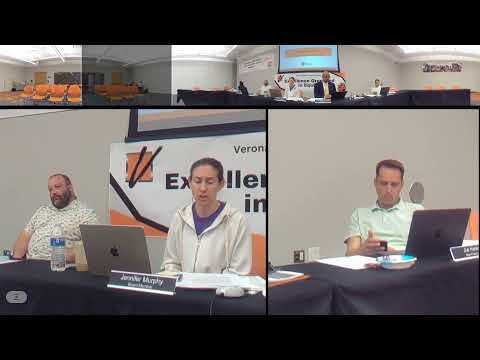
Raise Your Voice student leaders and their advisor told the Verona Area School District board on a June evening that the club has focused this year on mental-health awareness, student voice and practical supports at the high school.
The club’s advisor, Teresa Nicholas, a high‑school social worker, told the board, “I’m Teresa Nicholas. I’m a school social worker here at the high school and very proud advisor of the Raise Your Voice Club.” She said the group’s purpose aligns with the district’s strategic priorities of student agency and wellness and described projects students led this year.
The club built its work around three main activities: public outreach and fundraising through the local NAMI walk and other events; a redesign of small “reset” spaces into student‑friendly “recharge” rooms; and student advocacy at the State Capitol. “Their goal is to raise awareness about mental health at the high school,” Dr. Hawkins said in introducing the students. Student co‑presidents Micah Bartels and Ruby Bellen described their work on the NAMI walk, the recharge rooms and a day of advocacy in Madison where students practiced delivering pitches to state representatives.
Students described the recharge rooms as smaller, calming spaces inside student services that were renamed from “reset” to “recharge” and redecorated with nature themes, soft lighting and calming audio. On board follow‑up, Teresa Nicholas said the rooms are used “regular, daily,” adding they are embedded in the student services area and available before, during and after the school day. The club credited support from a staff donor, referred to in the meeting as Mr. Cox, for financial and emotional backing during the redesign.
Students also described a recent collaboration with the Wisconsin Department of Public Instruction: district students were filmed for a DPI promotional video about school‑based mental‑health services that now appears on the DPI web page; the presentation noted some footage came from other buildings used in the video. The students described partnerships with other clubs (Best Buddies, Letters of Love) and plans for monthly themes and additional fundraisers next year.
Board members thanked the students and staff. President Christopher Murphy praised the students’ leadership and noted that student‑led efforts help bring district values into classrooms and facilities. Several board members asked about plans to expand student outreach and publicity so more students know the rooms and services are available; Nicholas said the club and student services plan to advertise more in the coming year.
The club asked the board to continue highlighting school‑based mental‑health supports; students and advisors said the club has helped members learn to explain their needs and find resources without stigma. Board members and administrators said they would continue to look for ways to support the group and scale their outreach.
The board received the presentation; no formal action or vote accompanied the report.
The board’s recognition of Raise Your Voice followed routine agenda business and occurred during the district’s student‑recognition portion of the meeting.