
Airport fuel manager: pipeline maintenance forces truck deliveries and daily coordination
Get AI-powered insights, summaries, and transcripts
Subscribe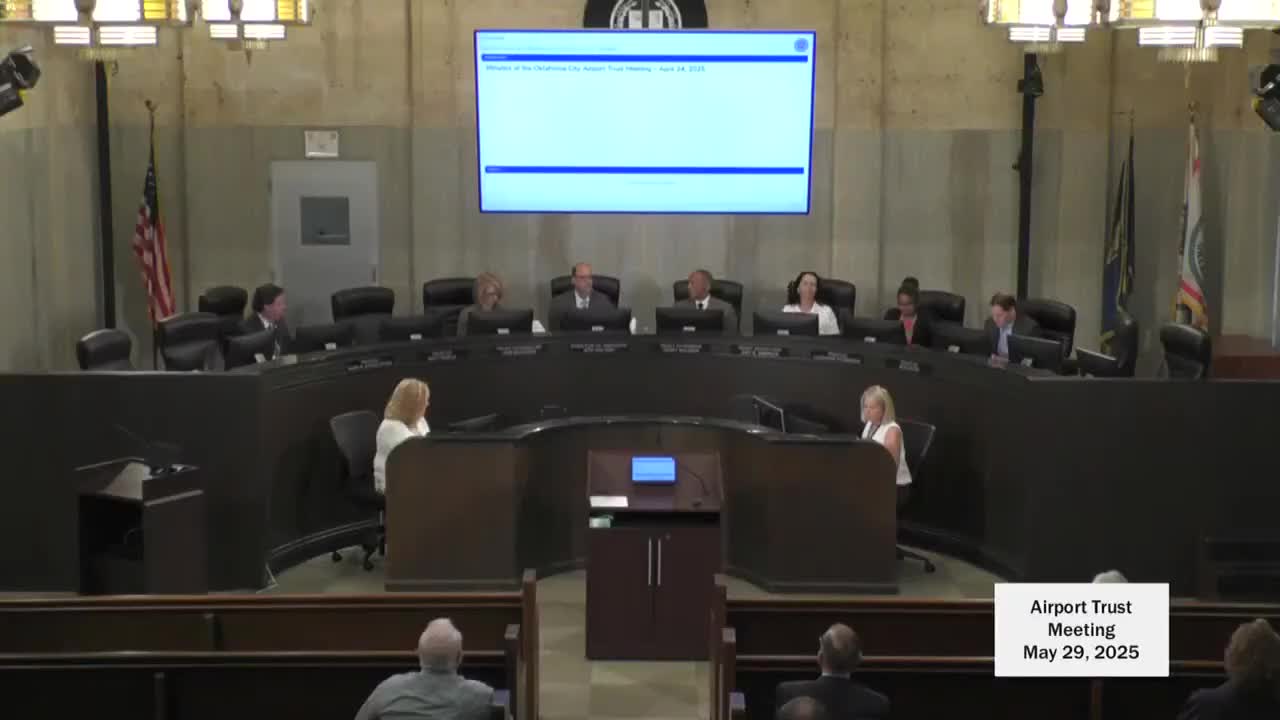
Summary
Carrie Cox, airport aviation fuel manager, told the Oklahoma City Airport Trust on May 29 that the trust operates 29 fuel tanks across three airports, does not own the product that flows through them, and must coordinate truck deliveries when the Phillips 66 pipeline is down.
Carrie Cox, the airport aviation fuel manager, told the Oklahoma City Airport Trust on May 29 that the trust operates 29 fuel tanks across the city’s three airports and relies on a mixed pipeline-and-truck supply that occasionally forces last‑minute deliveries.
Cox said the trust never owns the Jet A that moves through its facilities — “the whole time that the fuel is in our possession, it's owned by Phillips 66” — and that the job includes purchasing, ordering and maintenance for fueling infrastructure as well as coordinating with tenant fixed‑base operators who actually refuel aircraft.
The distinction matters because, Cox said, the trust must adapt when the multiproduct pipeline that supplies Jet A is offline for maintenance or when refinery batching leaves the city between shipments. “We do receive transports as well, when the pipeline goes down for maintenance and so forth,” she said. When that happens, she said, staff manage a “mad dash” of truck deliveries and coordinate with airlines to ensure flights can depart.
Cox described the office’s staffing and revenue model: she said she supervises six staff members (one field operations supervisor and five aviation fuel system technicians) and that the trust generates revenue by charging for fuel throughput rather than owning the product itself. “We just get paid coming, and we get paid going, and that's how we generate revenue,” she said.
Trust members and staff applauded the presentation and acknowledged the group’s behind‑the‑scenes work. A trust speaker noted the coordination role Cox described, adding that when the pipeline is unavailable airport staff must “make sure there's enough fuel to put in the airplane so the flight can” proceed.
The presentation included a brief recognition: John Storms was welcomed back after an absence. No formal action or vote was taken on the fuel presentation; it was an informational item on the agenda.
The trust did not provide a timetable for infrastructure changes to reduce reliance on truck transports, and no financial figures for contingency fuel purchases or long‑term pipeline solutions were presented at the meeting.