Get Full Government Meeting Transcripts, Videos, & Alerts Forever!
Get email alerts on the Equipment Communications Fleet topic
No spam. Unsubscribe anytime.
Radios, phones, vehicles and tasers: commissioners flag higher maintenance and replacement costs
Summary
The budget review highlighted rising communications and fleet costs: a proposed radio recalibration quote, continued Verizon phone expenses with first-responder priority, higher vehicle-maintenance spending and debate over whether taser and bulletproof-vest costs are annual maintenance or one-time enhancements.
Commissioners heard detailed requests for increased funding to maintain and replace equipment used by the sheriff's office, including radios, cellphone plans, vehicle maintenance and less-lethal gear.
Communications: Staff presented a quote to recalibrate and reprogram county radios (described in the meeting as 'deviation checks'/recalibration). Commissioners were told the service would cost roughly $18,000 and that maintaining a residual balance (about $9,300 in the discussion) would be prudent to handle future incidental repairs to handheld units. The sheriff's office explained radios occasionally fall 'out of balance' and need a technical re-tuning; aging handhelds and intermittent repairs also require budget reserves. The county confirmed the sheriff's office keeps Verizon service because of better rural coverage and first-responder priority service; staff said Verizon first-responder discounts and priority access already apply to the sheriff's lines.
Phones and data: Commissioners noted a large monthly cell-phone budget covering the entire sheriff's office and asked whether carrier changes had been considered; the office said switching carriers was not cost-effective because of service gaps in remote areas and loss of first-responder prioritization.
Fleet and vehicle maintenance: Vehicle-repair and maintenance funding was raised to reflect higher parts and labor costs, loss of the county's salvage supply for used parts and more work pushed to dealerships because of specialized diagnostic equipment. Commissioners discussed whether to add a cushion (suggested 12.5' 15%) to fuel and maintenance lines to hedge against global price swings and supply disruptions.
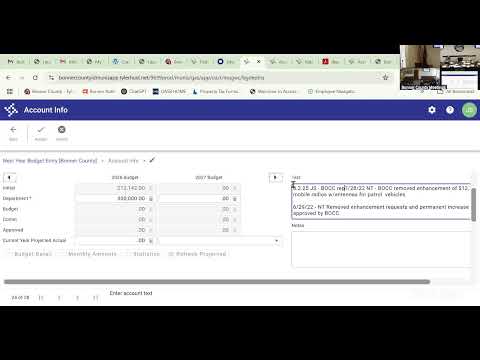
Less-lethal equipment and vests: Commissioners and staff debated classifying taser purchases as 'enhancements' (one-time buys) or as recurring equipment-maintenance costs. The sheriff's office said model upgrades by the proprietary vendor can force a time-limited need to replace units; commissioners recommended budgeting annually so the county is better prepared if a forced upgrade occurs.
Capital replacements: The capital-vehicle line was discussed at length. Commissioners asked for a clearer vehicle-replacement schedule; sheriff's staff said the office historically aims to replace roughly four vehicles per year and estimated an all-in per-unit cost (vehicle plus outfitting) in the mid-$70,000 range. Commissioners asked staff to confirm a replacement schedule and consider raising the capital-vehicles allocation to avoid emergency replacements later.
Ending: Commissioners instructed staff to keep a contingency in the communications and vehicle-maintenance lines, to document expected life cycles for radios and tasers, and to present a vehicle-replacement schedule at the next meeting for final budget decisions.